
How Thick Is a Garage Door? A Clear Guide to Choose
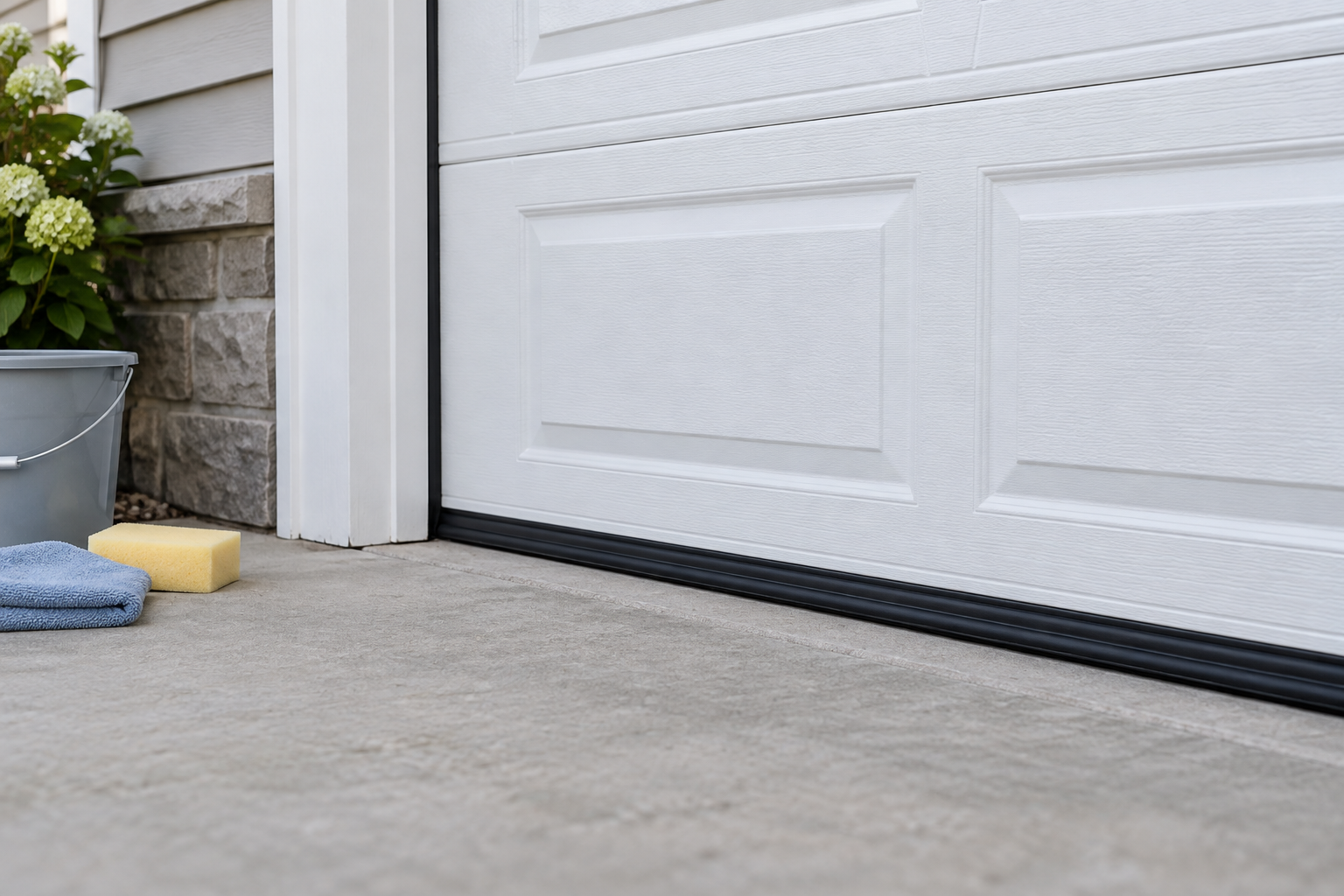
How Thick Is a Garage Door? Smart Insulation Guide
If you are comparing replacement doors, “how thick is a garage door?” sounds like a question with one simple answer. In practice, you need to know whether a seller means the complete section, its insulation, or just the metal skin.
For a residential insulated sectional door, 1⅜ inches and 2 inches are useful reference sizes, although they are not universal standards. Amarr’s Olympus range, for example, offers these two polyurethane insulation thicknesses. Always confirm the exact section specification for your chosen model before ordering. See Amarr’s Olympus specifications.
This guide focuses on overhead sectional garage doors. Rolling steel curtains, custom wood doors, and aluminum glass doors require their own specifications.
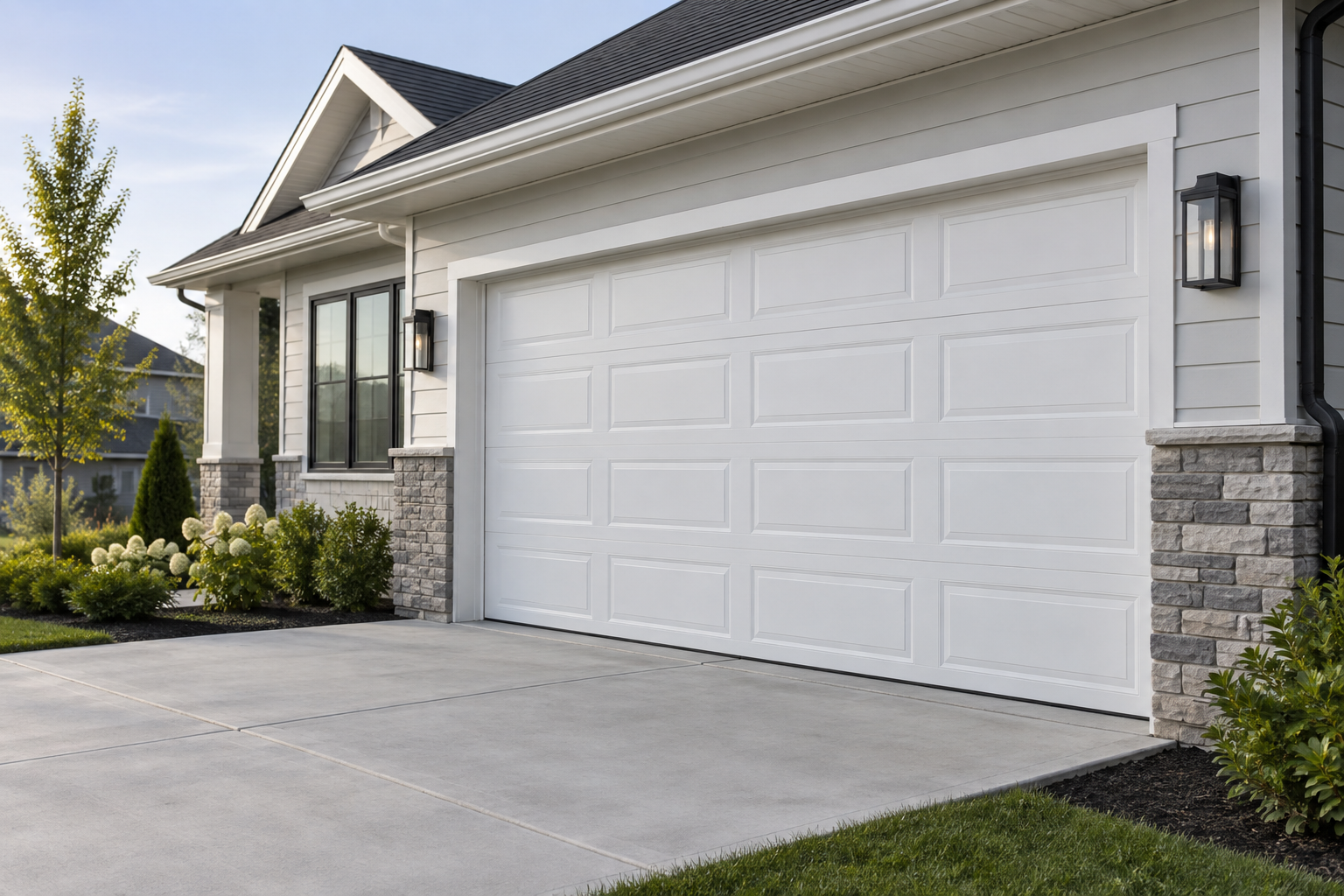
What Does Garage Door Thickness Actually Mean?
Three measurements can appear in the same conversation. Keeping them separate prevents an expensive ordering mistake.
Section thickness is the front-to-back depth of the door section. Ask whether the stated dimension includes decorative overlays or other projections.
Insulation thickness describes the insulating core. It does not tell you everything about the finished section or its thermal performance.
Steel thickness refers to the metal skin itself. A door advertised as two inches thick is not made from two inches of solid steel.
When requesting a quote, ask the supplier to label these measurements separately. A description such as “insulated steel door” leaves too much unanswered if you are comparing different product ranges.
Useful Inch-to-Millimeter Conversions
| Advertised measurement | Metric equivalent |
|---|---|
| 1⅜ inches | 34.925 mm, approximately 35 mm |
| 1½ inches | 38.1 mm |
| 1¾ inches | 44.45 mm |
| 2 inches | 50.8 mm |
These are mathematical conversions, not a list of sizes available from every manufacturer. Use the dimension printed on the model’s technical documentation rather than rounding when ordering replacement components.
How Construction Changes the Answer
A single-layer steel door has an exterior steel shell without a factory-installed insulating sandwich. Its formed edges can give the section depth even though the sheet metal itself is thin.
A double-layer door adds insulation behind the outer steel. A triple-layer design places insulation between exterior and interior steel skins, creating a finished interior face. Amarr explains these arrangements in its garage door construction guide.
This distinction matters when comparing two doors described with the same nominal depth. Ask what occupies that space and whether the inside has a steel backing, exposed insulation, or another finish.
For wood and decorative overlay doors, request a section drawing. A raised trim piece may project beyond the structural panel, so measuring the most prominent feature can give the wrong figure for replacement hardware.
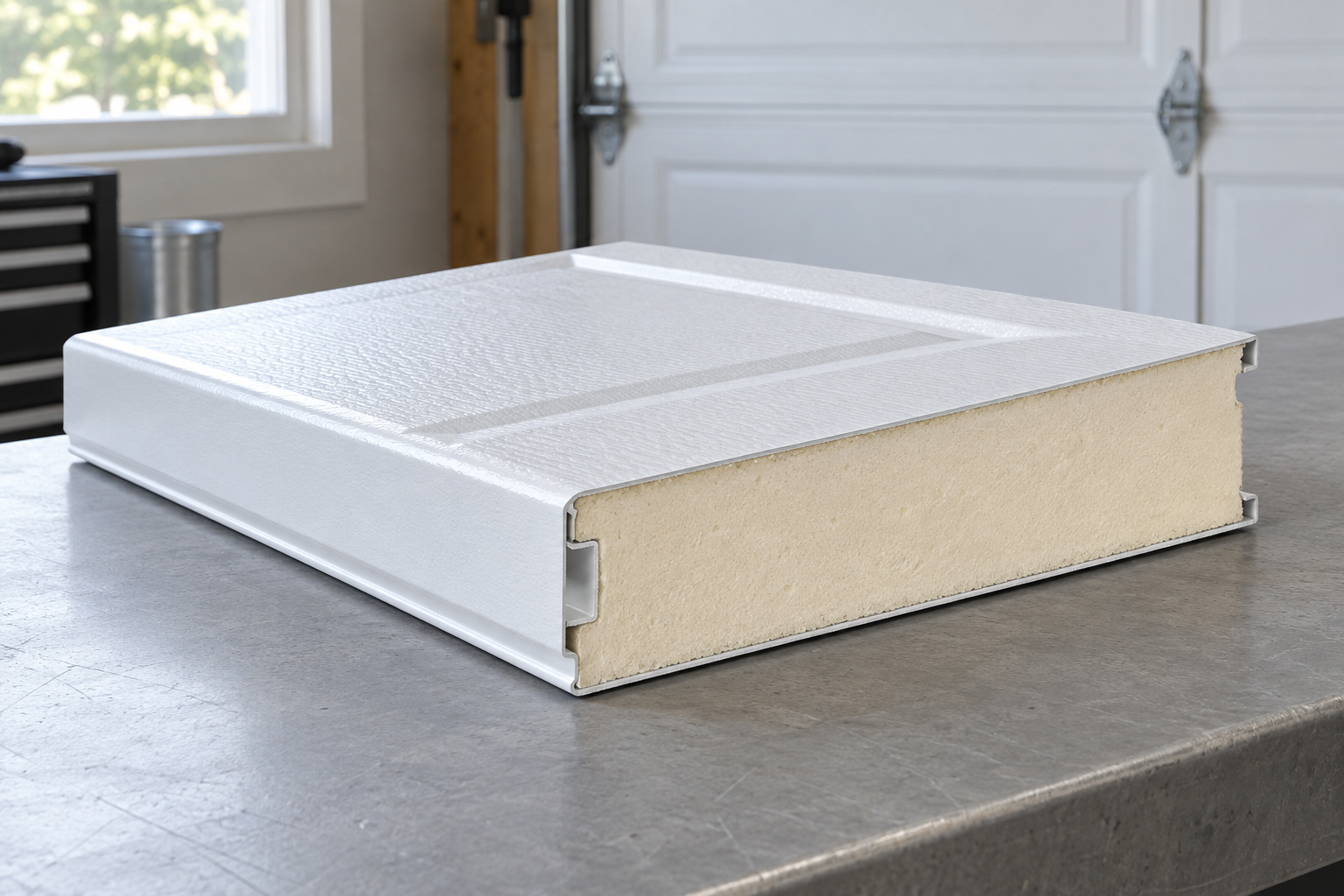
Does a Thicker Garage Door Insulate Better?
More thickness can provide room for more insulation, but thickness alone is an incomplete buying guide. Insulation material and the way the entire door is assembled also matter.
Compare the thermal ratings supplied for the exact models under consideration. R-value describes resistance to heat flow through the insulation material; a higher value indicates greater resistance. Whole-door U-factor describes heat transfer through the tested assembly, with lower values indicating better performance.
Amarr’s explanation of U-factor and R-value distinguishes these measurements and explains its verified thermal ratings. Do not assume an advertised insulation R-value represents every part of the installed door.
For an attached garage, consider how often you use the space and what rooms border it. For a detached storage garage, you may assign less value to temperature control.
Write down your actual goal before comparing options: a more comfortable workspace, a finished interior, or replacement of damaged sections. That makes it easier to decide which specifications deserve your budget.
How to Check Your Existing Door’s Thickness
Start with paperwork. A model number and manufacturer specification are usually more useful than an awkward measurement taken around hinges.
- Find the identification label. Look for an accessible label on the inside of the closed door. Photograph the manufacturer, model, and serial information without removing covers or hardware.
- Check the original documents. Review your invoice, owner’s manual, or product sheet for section depth and construction.
- Ask the manufacturer or dealer. Send the label photograph and explain whether you need an insulation specification, a replacement section, or hardware.
- Measure only if safely accessible. With the door fully closed and operation prevented according to its manual, use a ruler on an exposed, accessible section edge. Keep fingers away from joints and avoid measuring across hinges or trim.
If the edge is hidden, stop there. Do not open the door partway, remove a panel, or loosen brackets simply to reach it.
A clear set of photographs often helps the supplier distinguish the section body from its decorative face. Include a full interior view and a close view of the label.
Will a Thicker Replacement Fit?
Matching width and height is only the beginning. The replacement door must also work with its specified track arrangement, available clearances, and counterbalance system.
DASMA warns that existing tracks may be unsuitable for a replacement because section thickness, door weight, headroom, and opener position can differ. It recommends using track designed for the specific door; see its garage door safety guidance.
Before ordering, review the space around the opening with your installer. Our guide to garage door opening framing introduces the framing terminology you may encounter; use the selected manufacturer’s drawings for final dimensions.
If you are replacing just one damaged section, provide the model details rather than shopping by thickness alone. Ask the supplier to confirm the section profile, joint connection, finish, and compatibility in writing.
Does Greater Thickness Require a New Opener?
You cannot choose an opener from panel thickness alone. Have the installer check the complete door specification and confirm that the proposed opener is approved for that application.
Our article on choosing garage door opener horsepower introduces the selection factors. The opener manufacturer’s limits and installation requirements should determine the final choice.
A replacement door does not automatically mean replacing every accessory, but compatibility should be confirmed before anything is reused. If the motor is also being considered for replacement, read our explanation of replacing a garage door opener.
Ask for door installation and opener work to appear separately on the quote. Our overview of garage door opener installation planning can help you prepare questions about scheduling and setup.
What to Inspect Before Paying for an Upgrade
Before assuming a thicker door will solve your problem, describe what is actually wrong. Is the concern a damaged panel, uncomfortable temperatures, visible perimeter gaps, or poor operation?
Look at the closed door from a safe distance. Photograph damaged seals, visible corrosion, or gaps for your installer, and explain when the problem occurs.
If the door hangs unevenly or a cable appears damaged, stop operating it and arrange professional service. Our guide to broken garage door cable symptoms provides background; cable and spring work belongs with a trained technician.
When collecting quotes, request the same information from each company:
- Exact door model and construction.
- Nominal section depth and insulation type.
- Available thermal ratings for the chosen configuration.
- Included tracks, hardware, seals, and installation.
- Removal, disposal, warranty, and any excluded work.
This gives you a fairer comparison than a price attached to “two-inch insulated door.” There is no reliable universal price premium based on thickness alone.
Frequently Asked Questions
How thick is a garage door in millimeters?
A 1⅜-inch measurement equals approximately 35 mm, while two inches equals 50.8 mm. Check whether the product listing describes section thickness or insulation thickness before using that number.
Is a two-inch garage door always the best choice?
No single thickness is best for every garage. Compare the actual construction, thermal performance, installation requirements, and your reasons for replacing the door.
Can I add insulation to make my existing door thicker?
Ask the door manufacturer whether it approves an insulation kit for your model. Have a qualified technician assess any resulting change in weight and balance before using a modified door.
Can I replace a section with a thicker one?
Do not assume a thicker section will connect correctly to your existing door. Have the manufacturer or authorized supplier identify a compatible replacement from the model information.