
Garage Door Spring Maintenance: A Safe Homeowner Guide
Garage door spring maintenance starts with knowing what is safe to observe and what must be left to a trained technician. Springs counterbalance a heavy door, and the force stored in them can cause severe injury if a part is adjusted, loosened, or removed. A homeowner’s role is to notice changes, keep the area clear, follow the model’s manual, and call for service when something looks or sounds wrong.
A spring does not need a do-it-yourself adjustment routine. Regular visual checks can help you notice rust, gaps, fraying, or uneven movement early. For broader upkeep of hinges, rollers, tracks, and opener safety features, see our garage door tune-up guide.
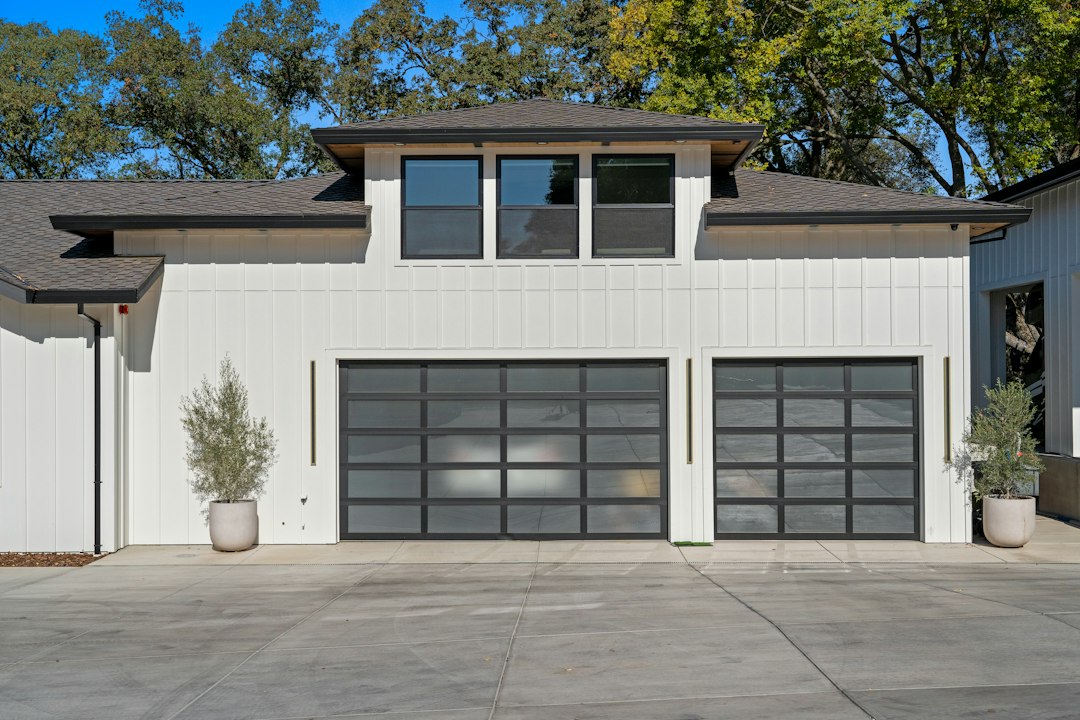
Photo by GoodLifeConstruction on Unsplash. A home exterior is shown for context; the photo does not depict a spring repair.
How garage door springs work
Most residential sectional doors use torsion springs above the opening or extension springs along the horizontal tracks. The spring stores energy as the door closes, then helps counterbalance the door as it opens. The opener is designed to move a balanced door, not lift the door’s full weight. When spring tension is wrong, the door may move unevenly and strain the opener, cables, rollers, and track hardware.
The design varies by door size, weight, and manufacturer. A torsion spring may show a visible gap when broken; an extension spring may look stretched or separated. These are clues for a professional inspection, not a reason to touch the assembly. Brackets, fasteners, springs, and lift cables can remain under substantial tension.
A safe monthly visual check
DASMA recommends regular homeowner safety checks and an annual visit from a trained door systems technician. Its maintenance guide advises monthly inspection and testing, while telling owners to consult the manuals for their specific door and opener. Keep your spring check visual: stand clear, do not reach into the tracks, and do not loosen or adjust hardware.
- Look from a safe distance for a visible spring gap, rust, deformation, or a spring that appears stretched.
- Scan lift cables for fraying, broken strands, kinks, or a loose section. Do not touch or pull them.
- Notice whether the door looks crooked, jerks, hesitates, or makes a new scraping or popping sound.
- Keep children, pets, and stored items away from moving parts and the door’s path.
- Keep the door and opener manuals accessible for model-specific instructions.
A visual check cannot confirm spring tension or predict exactly when a spring will fail. Do not perform a balance test or cycle a door that is crooked, unusually heavy, partly off its track, or making a loud bang. Stop using it and arrange an inspection.
Photo by Jonathan Cosens Photography on Unsplash. This is a generic mechanical spring illustration, not a garage-door spring or repair reference.
Warning signs that need a technician
Arrange service if you see a gap in a torsion spring, a visibly stretched or broken extension spring, a frayed cable, or a door that rises only a few inches before stopping. Other warning signs include one side lifting higher, a door slamming shut, a sudden change in opener noise, or a door that feels much heavier than usual. A loud bang may mean a spring has broken.
Do not keep pressing the opener button to see whether the door will move. If it is stuck open, keep people away and do not try to hold or lift it. For a damaged cable, read our broken garage door cable safety guide and leave the hardware untouched. For budgeting context, see our guide to garage door spring repair costs.
What professional spring maintenance includes
A trained technician can inspect springs, brackets, bearings, shaft, drums, cables, and attachment points, then assess how the door moves. They look for rust, cracks, stretching, uneven cable travel, loose hardware, and signs that another part is carrying extra load. The work should follow the door and opener manuals; ask the technician to explain the finding before approving repairs.
The technician can also check rollers, hinges, track alignment, photo-eye sensors, and opener safety features because the system works together. A bent track or worn roller can make a door noisy or uneven without the spring being the only problem. If track damage is mentioned, our garage door track guide explains one common track measurement; a technician should assess actual damage.
Ask for a written summary that separates inspection, maintenance, and replacement. If a door has two springs and one fails, ask whether the technician recommends replacing both and why. DASMA notes that matched replacement can help the system work efficiently. Request the part specifications, warranty, labor coverage, and total price before approving major work.
Should you lubricate garage door springs?
Lubrication rules vary by door. Some manufacturers include spring lubrication in their instructions, while others specify which parts to lubricate and which to leave dry. Clopay, for example, recommends annual lubrication for certain parts on its systems and excludes nylon rollers. That guidance is product-specific, so use the manual for your own door.
If your manual permits homeowner lubrication and the part is safely reachable without a ladder or contact with hardware, follow its product directions. Keep hands, clothing, and tools away from springs and cables. Do not spray the tracks or loosen fasteners. A persistent squeak, scrape, or pop deserves diagnosis rather than repeated spraying.
Extension springs need safety cables
Extension springs run along the horizontal tracks and stretch as the door closes. DASMA says each extension spring should have a safety cable running through it and secured at both ends. The cable is designed to contain a spring if it breaks. If you see extension springs without safety cables, ask a trained garage door professional to inspect the setup; do not install a cable yourself.
A safety cable is different from the lift cable that raises the door. They serve different purposes. DASMA says cables connected to high-tension spring systems should be replaced only by trained technicians. Keep both types of cable clear of hands and tools.
Photo by ubeyonroad on Unsplash. Use the manufacturer’s manual and a trained technician for spring-system questions.
How often should springs be checked?
Make a quick visual safety check part of a monthly routine, and have a trained technician inspect the system at the interval recommended by the manufacturer. DASMA recommends an annual visit; Clopay advises reviewing components at least annually and as often as every three months. Follow the manual for your specific door and opener.
High daily use, a heavy door, coastal salt, temperature swings, dust, or visible corrosion may call for earlier attention. Do not wait for the next scheduled visit if movement or sound changes suddenly. Keep a note of service dates, unusual sounds, and parts replaced so the technician can see whether the problem is recurring.
What to do when you spot damage
Stop operating the door if it hangs at an angle, drops, comes off its track, or has a broken spring or loose cable. Keep people and vehicles out of its path. Do not pull the emergency release while the door is open or unstable; it could move unexpectedly. If it is closed and safe to leave in place, keep it closed until inspected.
When booking service, describe what you saw or heard and whether the door is open or closed. Ask about inspection fees, what the visit covers, and whether you will receive an itemized estimate before parts are replaced. Do not approve a spring adjustment or major repair without understanding the diagnosis and total price.
Maintenance mistakes to avoid
- Never wind, stretch, cut, remove, or adjust a torsion or extension spring.
- Never loosen bottom brackets, winding cones, red-marked fasteners, or cable drums.
- Never pull on a frayed lift cable or try to repair an extension spring.
- Do not force a crooked, heavy, or jammed door with the opener or by hand.
- Do not treat lubricant as a fix for binding, slamming, or unexpected reversal.
Frequently asked questions
Can I inspect my garage door springs myself?
You can look for visible rust, a gap, deformation, or a loose cable from a safe distance. Do not touch the spring system, test tension, or perform a balance test when the door acts abnormally. A trained technician should diagnose spring wear or tension problems.
How often should garage door springs be lubricated?
Follow the manual for your exact door. Some manufacturers include annual lubrication; the parts and products permitted differ. If the spring is hard to reach or the door moves unevenly, leave the work to a technician.
Do extension springs need safety cables?
Yes. DASMA says a safety cable should run through each extension spring and be secured at both ends. If yours appear to be missing cables, ask a trained professional to inspect the system instead of fitting them yourself.
Can I keep using the opener if a spring breaks?
No. Stop operating the door and keep people clear. The opener is not designed to compensate for a broken spring, and repeated attempts can damage equipment or move the door unpredictably. Arrange professional service.
A safe maintenance routine
For homeowners, garage door spring maintenance means observing the system, following the correct manual, and responding early to warning signs. A monthly visual check and periodic professional inspection can help identify wear while keeping high-tension work with trained technicians.
If the door becomes crooked, heavy, noisy, or unreliable, stop using it and ask for a clear diagnosis and written estimate. A safe system depends on the spring, cables, tracks, and opener working together.