
Remote garage door opener not working: 7 Smart Fixes
Remote garage door opener not working
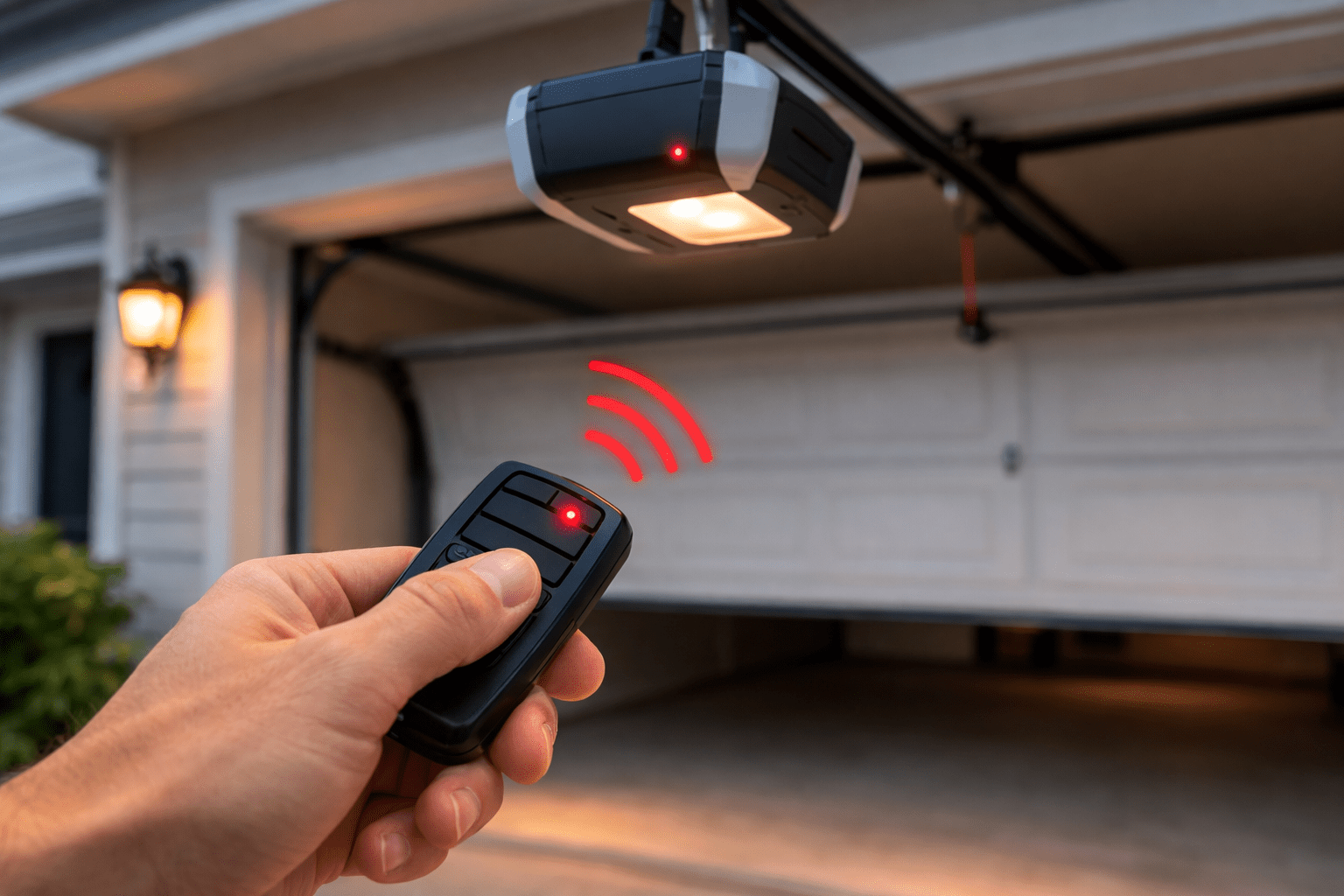
A homeowner usually notices the problem at the worst possible moment: rain is falling, the driveway is busy, and the button that worked yesterday suddenly does nothing. When you are dealing with remote garage door opener not working, the issue can feel bigger than it really is. In many cases, the cause is simple, the fix is affordable, and the solution takes only a few minutes to test. Common problems include weak batteries, lost programming, radio interference, dirty contacts, and receiver issues, while wall-button testing can help isolate whether the problem is in the remote or the opener itself.
This guide explains what the issue means, why it happens, how to find the exact fault, how much repair may cost, how long a remote should last, and whether you should repair, reset, or replace the system. If you have been searching for answers about remote garage door opener not working, this article will walk you through practical steps in a clear order, including safe troubleshooting, installation basics, and the pros and cons of DIY fixes. Reprogramming often involves locating the opener’s Learn button, pressing it, then pressing the remote within about 30 seconds, while holding the Learn button too long may erase paired remotes.
What It Means
The phrase remote garage door opener not working usually means the handheld transmitter is sending no usable signal to the opener, or the opener is not receiving or acting on that signal. In plain terms, you press the button and the door does not move, responds only sometimes, or works only when you stand very close. Common explanations include dead batteries, lost sync, blocked or weak signal, dirty contacts, or failure in the opener’s receiver or logic board.
Sometimes remote garage door opener not working does not mean the whole door system is broken. If the wall control works but the remote does not, that points toward a remote problem, a lock setting on the wall control, or lost programming rather than a fully failed opener. If neither the wall button nor the remote works, the problem may involve power supply, wiring, or the opener unit itself.
Why It Happens
There are several reasons remote garage door opener not working becomes a recurring complaint in otherwise reliable systems. The most common cause is battery failure or weak battery output, especially when the remote works only at short range. Other frequent causes include accidental reset after a power outage, dirty battery contacts, stuck buttons, antenna problems, and interference from nearby electronics such as routers, smart home devices, or incompatible LED bulbs.
Another reason remote garage door opener not working can appear suddenly is that the opener loses the stored pairing with the remote. Many troubleshooting guides recommend re-syncing the remote at the opener by using the Learn button and then testing the response immediately. If multiple remotes fail at the same time, the fault may be less about the handheld units and more about the receiver, antenna, or logic board inside the opener.
How To Find The Cause
The fastest way to diagnose remote garage door opener not working is to test the system in a simple sequence. Start with the battery, then try the wall switch, then test a second remote if one is available. After that, check the opener antenna, look for lock mode on the wall console, and consider recent changes in the garage such as new LED bulbs or networking devices. Several sources recommend this order because it separates easy fixes from deeper hardware faults.
When remote garage door opener not working persists, range matters. If the remote works only when you are very close, that often suggests weak battery power, interference, or an antenna issue rather than total remote failure. If the remote never works but the wall control does, reprogramming is a logical next step; if reprogramming fails and a backup remote also fails, the opener’s receiver or control board deserves closer inspection by a technician.
How To Reprogram It
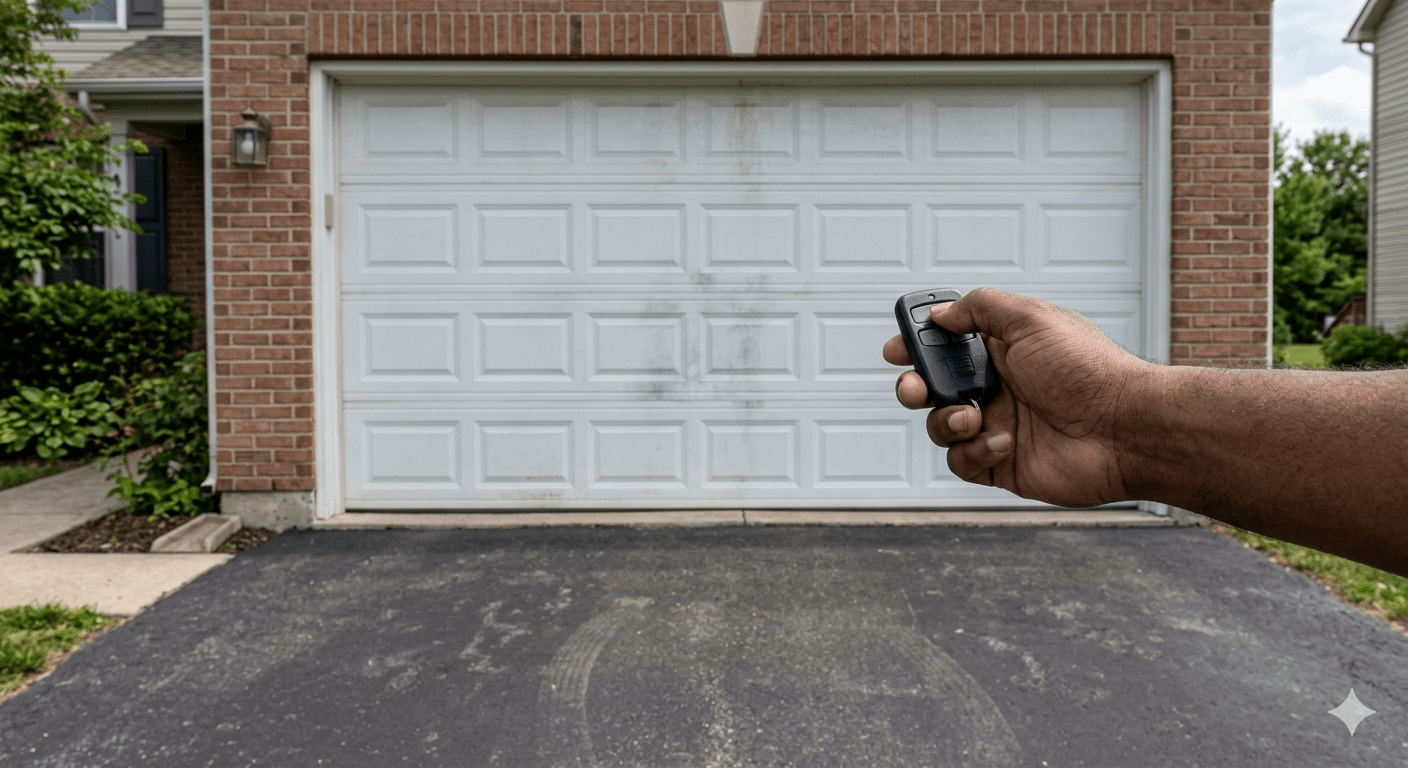
A common fix for remote garage door opener not working is reprogramming the remote to the opener. Most modern openers have a Learn or Program button on the motor unit. The usual process is to press the Learn button, then press and hold the desired remote button within about 30 seconds until the opener light flashes or the unit clicks, confirming the pairing.
Be careful during this step because remote garage door opener not working can become more confusing if you accidentally erase existing remotes. Some instructions note that pressing and holding the Learn button too long may clear stored programming, which means every remote may need to be added again. If you need a fresh start, some manufacturers also allow clearing all old codes before reprogramming each remote one by one.
How To Install A New Remote
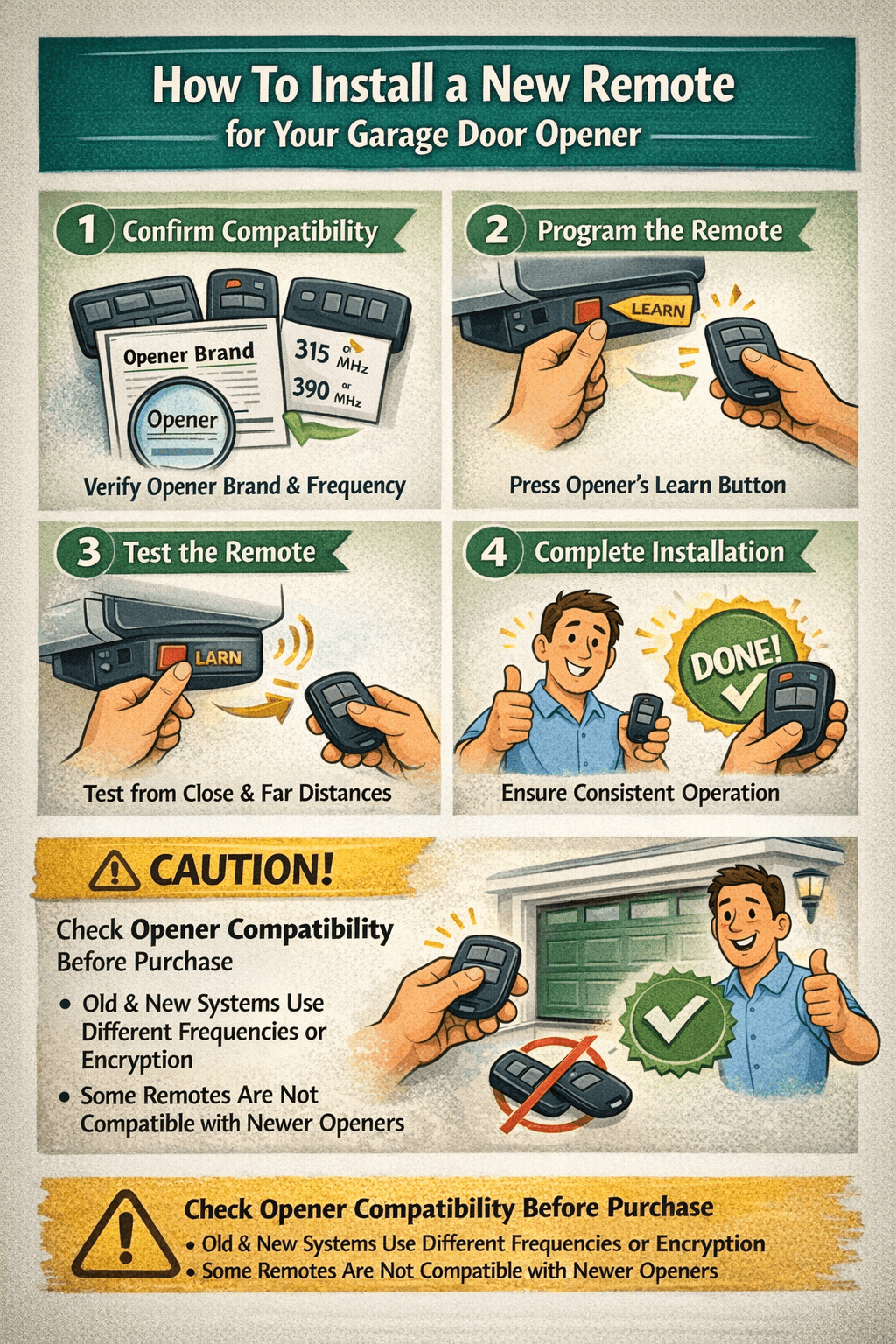
If remote garage door opener not working turns out to be a failed transmitter, installing a new remote is usually straightforward. First, confirm compatibility with your opener brand and frequency, then add the remote using the opener’s Learn button and test the programmed button from different distances. The programming method for many systems is nearly the same as re-syncing an old remote, which is why replacement can be easier than repairing a damaged handset.
Before buying, remember that remote garage door opener not working is not always solved by a random universal remote. Older or newer systems may use different frequencies or encryption standards, and some older remotes are no longer compatible with newer openers. Choosing the correct model saves time and avoids the frustration of pairing a device that can never communicate properly with the opener.
How Much It May Cost
For many homeowners, the first question after remote garage door opener not working is cost. Minor fixes such as replacing batteries or cleaning battery contacts are usually inexpensive, while replacing the handheld remote is often cheaper than repairing a badly worn unit. Costs rise when the real problem involves the receiver, opener logic board, rewiring, or a full opener replacement. Service companies note that professional diagnosis is often necessary once basic DIY steps fail.
The practical way to think about remote garage door opener not working is by repair tier. A battery or reprogramming issue is low-cost, a replacement remote is moderate, and opener electronics are the expensive end. If the wall switch works, many homeowners can start with the remote itself; if all controls fail, budgeting for professional inspection is smarter because the fault may involve power, board failure, or safety-related components.
How Long Remotes Last
A typical remote can last for years, but the lifespan depends on usage, battery quality, storage conditions, and how often the buttons are pressed. One source notes that garage door remote batteries often last around 2 to 5 years, which is why weak power is a frequent explanation for remote garage door opener not working. A remote that lives in a hot car, gets dropped often, or is exposed to moisture may fail sooner even if the opener itself is fine.
When remote garage door opener not working becomes frequent with an older transmitter, age may be the hidden factor. Button wear, cracked solder joints, dirty contacts, or internal corrosion can make a remote unreliable long before it stops completely. In that situation, replacing the remote may be more practical than repeatedly changing batteries or reprogramming the same worn device.
Should I Repair Or Replace It
If you are wondering whether remote garage door opener not working calls for repair or replacement, start with symptoms. Replace the battery, clean the unit, and reprogram it first, because those are the easiest and lowest-cost actions. If the remote still fails, feels sticky, has visible damage, or works inconsistently after repeated resets, replacement is usually the better choice.
However, remote garage door opener not working should not automatically lead to buying a new remote if the evidence points to the opener. When multiple remotes stop working, when range drops suddenly for every remote, or when the wall control shows lock mode or unusual behavior, the opener receiver or wall console may be the real source of the problem. In those cases, replacing one remote will not solve the underlying issue.
Can I Fix It Myself
In many homes, yes, remote garage door opener not working is something you can troubleshoot on your own. Safe DIY steps include changing batteries, cleaning contacts, checking whether the wall button works, inspecting the opener antenna, moving potential interference sources, and reprogramming the remote. These steps are widely recommended because they address the most common faults without requiring advanced tools.
Still, remote garage door opener not working is not always a simple DIY case. If you suspect wiring damage, a failed logic board, recurring power issues, or anything involving internal opener electronics that you are not comfortable handling, professional service is the safer move. Garage door systems combine electrical parts and heavy moving components, so guessing your way through a deeper failure can create risk as well as extra expense.
Advantages And Challenges
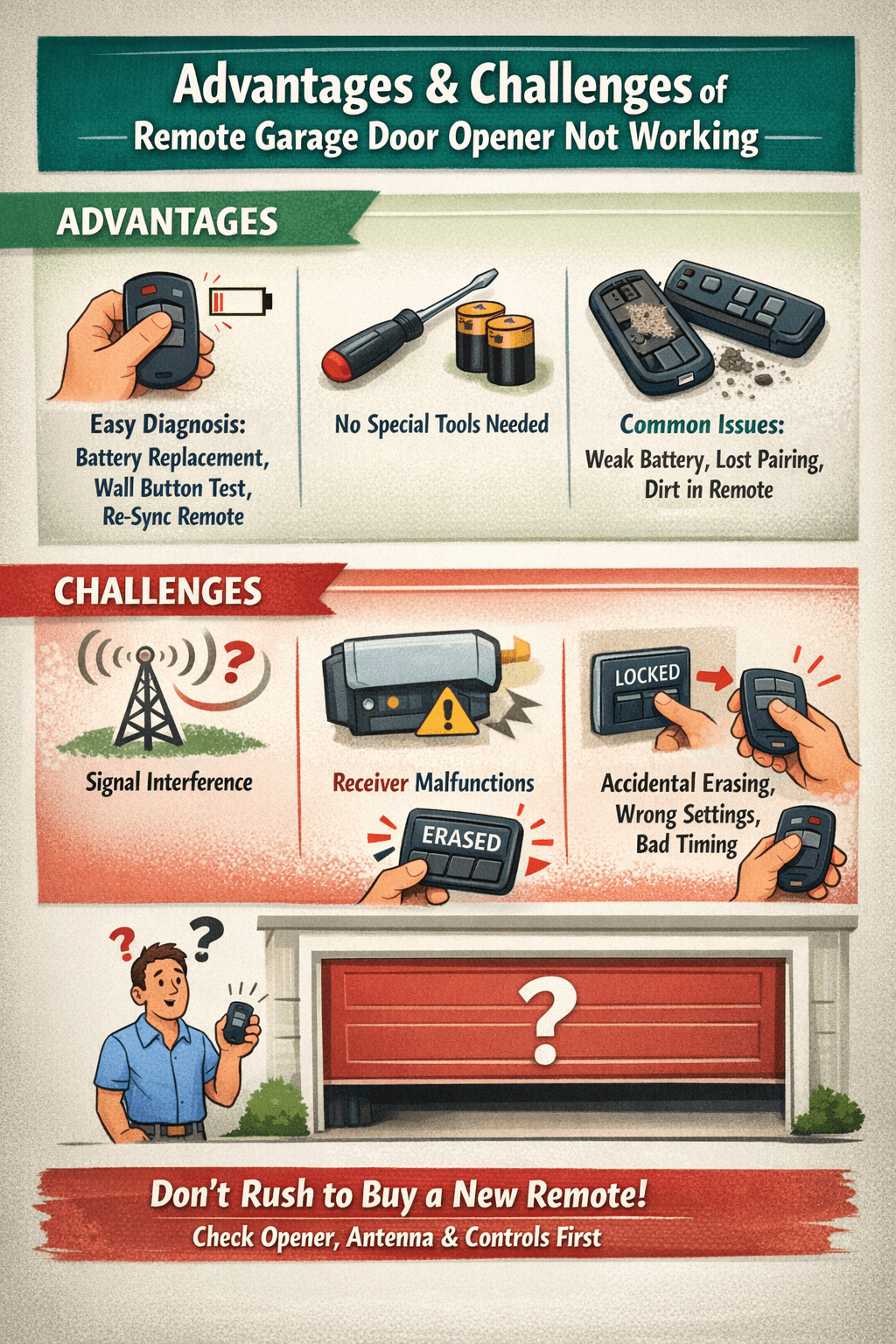
Talking about the advantages and challenges of remote garage door opener not working may sound strange, but there is value in understanding both sides of the problem. One advantage is that the issue often reveals itself clearly and can be narrowed down with a few direct tests, such as battery replacement, wall-button use, and remote re-syncing. Another advantage is that many cases are solvable without special tools, especially when the cause is weak battery power, lost pairing, or dirt inside the remote.
The challenges of remote garage door opener not working are just as real. Interference can be inconsistent, receiver problems can mimic remote failure, and accidental erasing during programming can disable every remote at once. The problem also tends to happen at inconvenient times, which is why homeowners may rush into buying a new remote before confirming whether the issue actually comes from the opener, the antenna, or the wall control lock setting.
Four Quick Scenarios
Garage door not opening with remote or keypad
If the garage door will not open with either the remote or the keypad, the problem may be bigger than one transmitter. In this situation, remote garage door opener not working may point to a power issue, opener fault, or lost system programming rather than a single bad remote. Check the wall control, the opener’s power source, and whether the unit shows signs of life before focusing only on the handset. If all access methods fail, professional diagnosis is often the fastest path.
Garage remote not working after new battery
When a new battery does not solve the issue, remote garage door opener not working may involve dirty battery contacts, incorrect battery orientation, damaged buttons, or lost pairing. Fresh batteries help only if power was the true fault. Clean the contacts, recheck polarity, and try reprogramming the remote to the opener. If the remote still fails, test another remote to determine whether the problem is local or system-wide.
Garage door remote not working but wall button works
This is one of the clearest diagnostic clues. If the wall button works, remote garage door opener not working usually means the door opener still has power and can operate normally, so attention should shift to the remote, lock mode, or programming. Replace the battery, inspect the wall console for a lock feature, then re-sync the remote. If a second remote also fails, the receiver may not be accepting signals.
Garage door opener not working but wall button is
If the wall button appears active but the remote does nothing, the system may still be partially functional while ignoring radio commands. In many homes, remote garage door opener not working under this pattern suggests receiver trouble, interference, or a wall-control setting that blocks remote operation. Start with the easy checks first, but do not rule out opener electronics if the issue affects every remote you try.
FAQ / Remote garage door opener not working
What is the first thing to check when remote garage door opener not working starts suddenly?
The first check should be the battery, because weak or dead batteries are among the most common causes of remote failure, and low battery can also reduce range before the remote stops working completely.
How do I find out whether the remote or the opener is bad?
Use the wall switch and, if possible, a second remote; if the wall switch works but the remote does not, the fault is often in the remote, its programming, or a lock setting, while failure across all controls may point to the opener.
How much should I expect to spend?
Simple fixes such as batteries, cleaning, or reprogramming are usually inexpensive, while replacement remotes cost more and receiver or logic board problems can push the repair into a much higher range that often justifies a service visit.
How long does a garage door remote battery usually last?
A remote battery often lasts about 2 to 5 years, depending on how frequently the remote is used and the quality of the battery installed.
Can I install a new remote myself?
Yes, many homeowners can install one themselves by confirming compatibility, locating the opener’s Learn button, and completing the pairing steps within the programming window.
Should I replace the remote if a new battery does not work?
Not immediately, because remote garage door opener not working after a battery swap can still result from lost programming, dirty contacts, interference, or opener receiver issues. Testing the wall button and reprogramming first is the smarter sequence.
Why does the remote only work when I am very close to the door?
That pattern often suggests weak battery power, radio interference, or an antenna problem on the opener rather than a completely dead remote.
Can LED bulbs really affect the remote signal?
Yes, some sources note that nearby non-compatible LED bulbs can interfere with radio frequency communication between the remote and opener.
Is it safe to keep trying random fixes?
Basic steps like changing batteries, cleaning, and reprogramming are generally reasonable, but repeated guessing around electrical components or the opener’s internal electronics is less safe and may create more issues.
When should I call a technician?
Call a technician when multiple remotes fail, reprogramming does not work, the wall control behaves oddly, or you suspect a receiver, wiring, or logic board problem.
Conclusion
When remote garage door opener not working interrupts your day, a calm step-by-step approach usually leads to the answer faster than replacing parts at random. Start with the battery, test the wall control, look for lock mode, check for interference, inspect the antenna, and then reprogram the remote using the opener’s Learn button if needed. Those steps match the most common causes identified across troubleshooting and programming guides.
If remote garage door opener not working continues after those checks, the problem may be deeper than the handheld unit. At that point, replacing the remote may help only if the transmitter is truly worn out; otherwise, the receiver, logic board, or opener system may need professional attention. A careful diagnosis saves money, reduces frustration, and gets your garage back to reliable daily use.
Other Resources
- reddit.com – Community discussion about troubleshooting a garage door that works from the wall button but not with the remote.
- YouTube Video: Garage Door Remote Not Working – Demonstrates common causes and troubleshooting steps when a garage door remote fails to operate the door.
- YouTube Video: Fix Garage Door Remote Issues – Shows practical steps to diagnose and resolve problems with a garage door remote control.
Other Helpful Articles
- Manually Open Garage Door from Outside – Explains methods used to manually open a garage door from the outside when the opener is not working.
- Garage Door Opener Is Beeping – Describes possible reasons a garage door opener produces a beeping sound and how to troubleshoot the issue.
- How Long Take Install Garage Door Opener – Provides an overview of the typical time required to install a garage door opener and factors that affect installation.