
Garage Door Sizes: 1 Best Options for Your Home
Garage Door Sizes: Essential Tips for Success
Understanding the complexities of residential and commercial architecture requires a deep dive into garage door sizes. For many homeowners, the garage is not merely a storage space for vehicles but a primary entry point, a workshop, or even a converted living area. Consequently, selecting the correct garage door sizes is paramount to ensuring functionality, safety, and curb appeal. When you begin the journey of replacing or installing a new overhead door, the sheer variety of dimensions can be overwhelming.
From standard single-car widths to massive commercial heights, the world of garage door sizes dictates everything from the type of opener you need to the aesthetic balance of your home’s façade. This guide will walk you through every aspect of measuring, buying, and maintaining doors of all dimensions.
The market for overhead doors has evolved significantly, offering more than just the traditional garage door sizes of the past. Today, you can find custom solutions designed to fit unique architectural openings, accommodating everything from lifted trucks to recreational vehicles. However, navigating these options requires knowledge.
If you choose the wrong garage door sizes, you risk poor insulation, security vulnerabilities, and increased wear on your mechanical systems. By mastering the fundamentals of garage door sizes, you can make an informed investment that enhances your property value and ensures decades of reliable operation.
What Are Standard Garage Door Sizes?
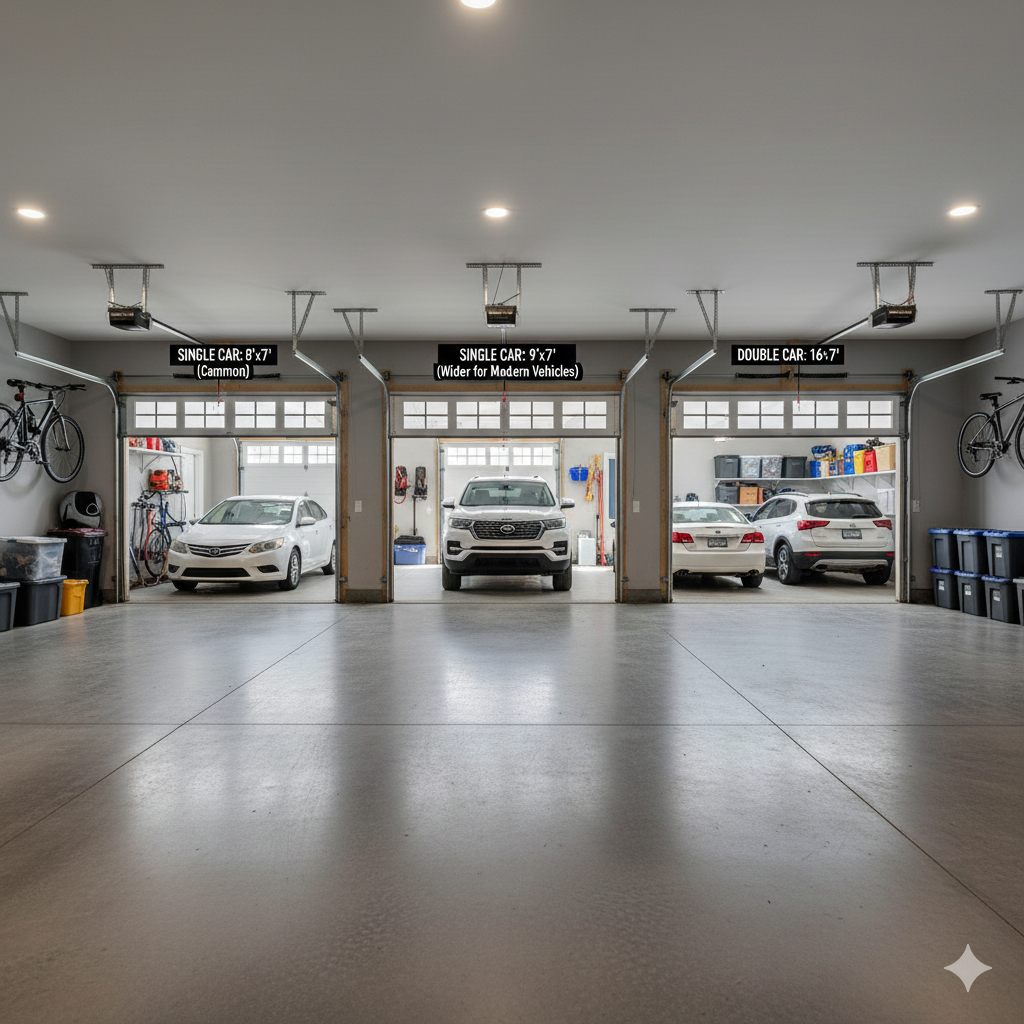
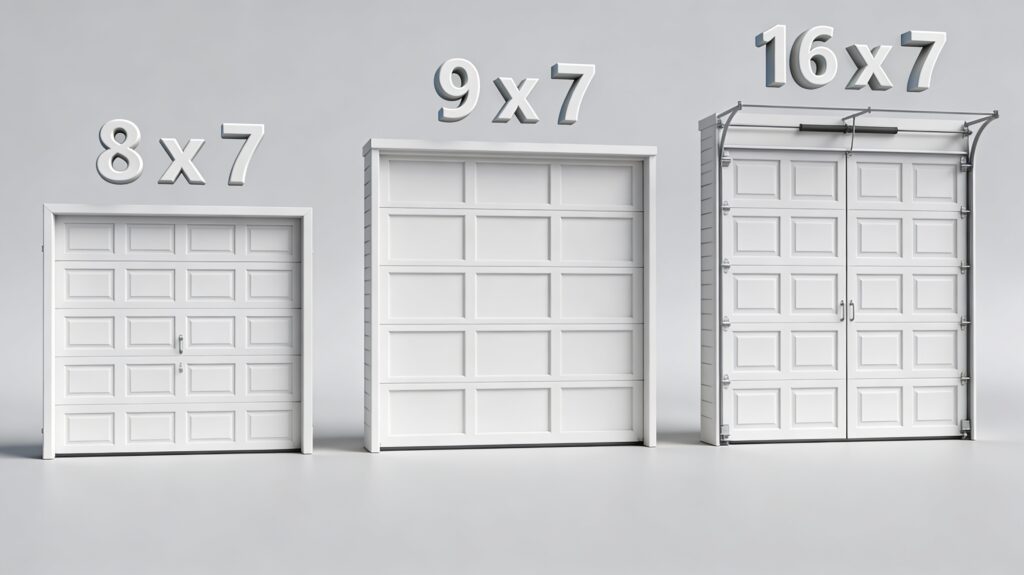
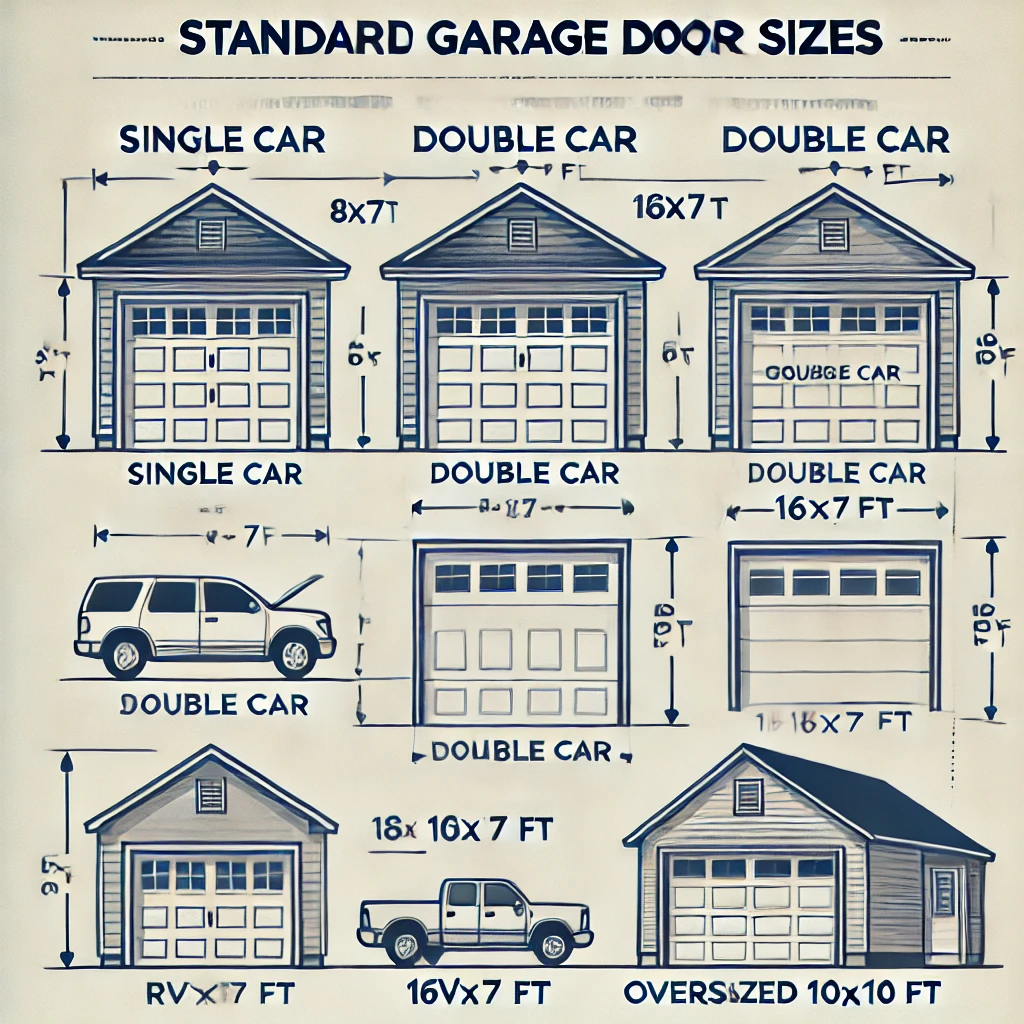
When discussing standard garage door sizes, we are generally referring to the pre-manufactured dimensions that are most commonly kept in stock by major retailers and distributors. For a single car, the most ubiquitous garage door sizes are typically 8 feet wide by 7 feet high, or 9 feet wide by 7 feet high.
These dimensions are designed to accommodate standard sedans and SUVs comfortably. However, as vehicles have grown larger over the years, many builders have started normalizing slightly wider garage door sizes to prevent accidental scrapes and mirror damage during entry and exit.
For homeowners with multiple vehicles, double garage door sizes are the standard solution. These doors usually measure 16 feet wide by 7 feet high. This width provides ample room for two vehicles to park side-by-side without the driver struggling to open their car door. It is important to note that while 7 feet is the standard height, 8-foot tall garage door sizes are becoming increasingly popular to accommodate taller trucks and roof racks.
If you have a modified vehicle or a large SUV, prioritizing height in your garage door sizes selection is a critical step that many buyers overlook until it is too late.
Understanding these standards is the first step, but remember that “standard” does not mean “universal.” Older homes often feature unique garage door sizes that do not conform to modern norms, necessitating custom orders or structural modifications.
How to Find the Right Garage Door Sizes
Finding the correct garage door sizes for your home involves more than just guessing based on your car type. You must perform accurate measurements of the rough opening. To find the precise garage door sizes you need, start by measuring the width of the opening at its widest point. It is best to measure at the top, middle, and bottom to ensure the frame is square.
If the numbers differ, use the widest measurement as your guide for the door, but you may need to shim the frame.
Next, measure the height of the opening at the highest point. This determines the height of the garage door you can install. Crucially, you must also measure the “headroom”—the space between the top of the door opening and the ceiling (or the lowest obstruction like lights or pipes). Standard tracks require about 10 to 12 inches of headroom, while specific garage door sizes with custom tracks might need up to 15 inches or more.
How to Buy Based on Garage Door Sizes
Once you have confirmed your measurements, the process of buying based on garage sizes begins. You have two main paths: big-box retailers or specialized garage door dealers. Retailers often stock the most common garage sizes, such as the 16×7 or 9×7 models, allowing for immediate pickup.
However, if your home requires non-standard garage sizes, you will likely need to order through a dealer who can commission a custom build from manufacturers like Clopay or Amarr.
When buying, consider how different materials affect the weight and, consequently, the hardware requirements for different garage door sizes. A large wooden door will be significantly heavier than a steel door of the same dimensions. This means that as garage door sizes increase, the quality and gauge of the steel tracks and hinges must also increase.
“Buying a door is an investment in your home’s envelope. Ensure your garage door sizes match not just the hole in the wall, but the lifestyle you lead.”
Make sure to cross-reference your garage sizes with the insulation values (R-value) offered. Larger doors have more surface area, making them massive thermal bridges. If you choose large garage sizes without adequate insulation, you will likely see a spike in your energy bills.
How Much Do Different Garage Door Sizes Cost?
The cost of a new unit is directly correlated to the garage door sizes you require. For the year 2025, a standard single 8×7 or 9×7 non-insulated steel door can cost between $700 and $1,500, excluding installation. However, as you move up to double garage door sizes, such as the 16×7, prices typically jump to the $1,200 to $2,500 range.
Custom garage door sizes attract a premium. If you need a door that is 10 feet wide by 9 feet high to fit a boat or work van, you enter the realm of semi-custom pricing. These garage sizes can easily range from $2,500 to over $5,000 depending on the material and finish. Furthermore, larger garage door sizes often require heavy-duty hardware packages and specialized spring systems, which add to the total bill.
| Door Type | Size | Est. Cost (Door Only) |
|---|---|---|
| Single Non-Insulated | 8′ x 7′ | $700 – $900 |
| Single Insulated | 9′ x 7′ | $900 – $1,500 |
| Double Steel | 16′ x 7′ | $1,200 – $2,000 |
| Custom Wood | Variable | $4,000+ |
Installation labor is also impacted by garage sizes. A small single door is a one-person job for a pro, but large double garage door sizes often require a two-person crew, increasing labor costs to the $500–$800 range.
How Long Does Installation Take for Various Sizes?
The time investment required to install a door varies significantly depending on the garage door sizes and the complexity of the site. For a professional team, swapping out standard single garage sizes (like an 8×7) is a relatively quick process, typically taking between 3 to 4 hours. This includes removing the old door, installing the new tracks, and balancing the system.
However, larger garage door sizes, such as 18-foot wide double doors or custom heavy wood carriage house doors, can extend the installation time to a full day (6-8 hours). The sheer weight and bulk of these larger garage sizes make maneuvering the panels difficult and dangerous, requiring slower, more methodical work.
If you are attempting a DIY installation (which is generally discouraged for torsion spring systems), you should budget at least double the time. A novice grappling with large garage door sizes often encounters alignment issues that professionals can spot instantly. Furthermore, if your garage sizes require extension kits for the opener rail or custom framing work, the timeline can stretch into multiple days.
How to Install Different Garage Door Sizes
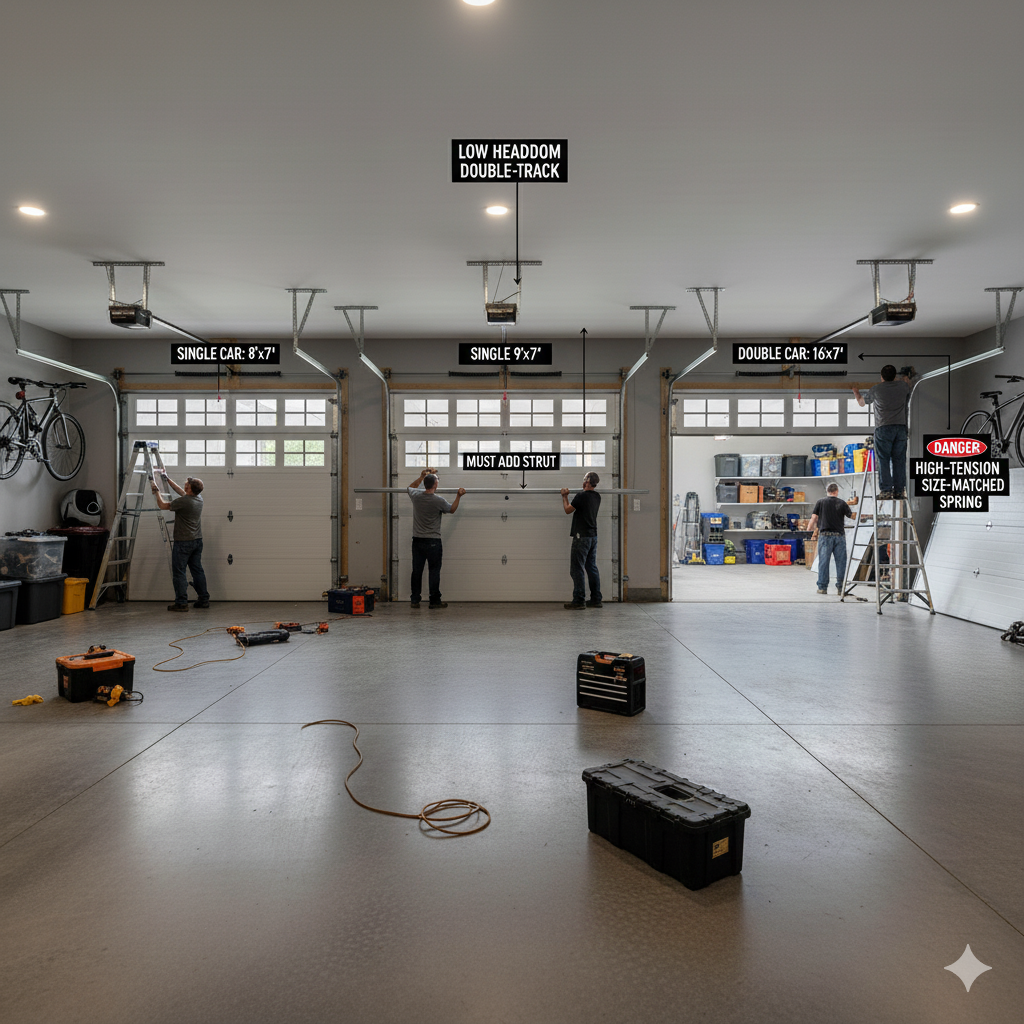
Installing varying garage door follows a similar theoretical process but differs in physical execution. The general steps involve preparing the opening, assembling the vertical tracks, and stacking the panels. However, with wider garage door, panel sagging becomes a concern. You must often install a strut (a metal stiffener) on the top section of every panel for doors 16 feet or wider to prevent bowing when the door is in the open position.
-
Prepare the Opening: Ensure the header is robust enough to support the spring assembly, which varies in torque based on garage door sizes.
-
Set the Vertical Tracks: Space them exactly according to the door width. If your garage door are off by even half an inch, the door will bind.
-
Stack Panels: Insert rollers into the hinges. For larger garage door, you will need a helper to hold the long panels steady.
-
Install the Spring Assembly: This is the most dangerous step. The size of the spring is directly dictated by the weight and dimensions of the garage door being installed.
For heavy, custom garage door sizes, you may need to install a double-track low headroom kit if ceiling space is tight. This complexity underscores why knowing your exact garage door before starting is crucial—having the wrong hardware kit in the middle of an install is a nightmare scenario.
How to Clean and Maintain Your Door
Regardless of your garage door sizes, regular maintenance is non-negotiable to ensure longevity. Cleaning is particularly important for large surface areas found on double doors. To clean vinyl or steel garage door, mix a solution of 1 cup of mild detergent (like car wash soap) with 5 gallons of warm water. Never use harsh chemicals or pressure washers, as high pressure can strip the coating off standard garage door sizes and force water into the mechanical joints.
-
Rinse: Hose down the door gently to remove loose grit.
-
Scrub: Use a soft sponge or microfiber cloth. For taller garage door sizes, you may need a long-handled brush.
-
Wax: For steel doors, applying a liquid car wax once a year protects the finish from UV fading.
Maintenance also involves lubrication. The larger your garage door sizes, the more stress is placed on the rollers and hinges. Every 6 months, spray a non-silicone based garage door lubricant on all moving metal parts. Do not grease the tracks; this attracts dirt which ruins the rollers. For wood garage sizes, inspect the finish annually for peeling or rot, and refinish as necessary to maintain the seal against moisture.
Advantages of Correct Sizing
Choosing the optimal garage door sizes brings immediate functional benefits. A properly sized door maximizes the usable width of your garage, making parking easier and reducing the risk of damaging your vehicle’s side mirrors. When garage sizes are matched perfectly to the structural opening, the weather stripping seals tightly against the jambs, creating a superior thermal barrier. This is critical for attached garages where air leakage can affect the home’s internal temperature.
Furthermore, correct garage door sizes ensure the longevity of your opener. If a door is too heavy or the spring balance is incorrect for the specific garage door installed, the electric opener has to work harder, leading to premature gear failure.
A well-balanced system, regardless of whether it is a small or massive door, should be liftable with one hand when disconnected from the opener. This balance is only achievable if the garage door and their corresponding spring systems are perfectly calculated.
Challenges with Custom Garage Door Sizes
While custom garage door sizes offer aesthetic freedom, they come with distinct challenges. The primary issue is lead time. While standard sizes are often in stock, custom garage door sizes can take 6 to 12 weeks to manufacture and ship. This can delay construction projects significantly.
Another challenge is repairability. If a panel is damaged on standard garage sizes, you can often find a replacement section quickly. However, for custom garage door sizes, a damaged bottom panel might mean replacing the entire door if the specific model or custom width is no longer fabricated. Additionally, finding hardware like torsion springs for unique garage sizes can be difficult, often requiring a professional to measure and custom-wind a spring, which is far more expensive than grabbing a standard spring off the shelf.
Special Technical Guide for Garage Door Sizes
This section covers four critical technical topics related to garage door sizes that homeowners frequently ask about.
Topic 1: Standard Garage Door Sizes
As previously noted, the most common residential garage door sizes are 8×7, 9×7, and 16×7. However, “standard” varies by region and builder. In golf cart communities, you might find 5×7 or 6×7 doors. In agricultural areas, 12×12 or 14×14 commercial garage door sizes are standard for barns. Knowing the “standard” for your specific housing type helps in sourcing parts cheaply.
Topic 2: 2 Car Garage Door Size
The ideal 2 car garage door sizes are 16 feet wide or 18 feet wide. An 18-foot door is increasingly preferred for modern wider SUVs, providing that extra foot of clearance on each side. If you are building a new garage, opting for the 18-foot option over the 16-foot among the available garage door sizes will significantly improve your daily quality of life, preventing door dings.
Topic 3: What Size Garage Door Opener Do I Need?
Your opener power must match your garage door sizes and weight.
-
1/3 HP: Suitable only for light, single-layer steel single doors.
-
1/2 HP: The industry standard. Perfect for standard 16×7 or 9×7 residential doors.
-
3/4 HP: Required for heavy wooden doors, carriage house doors, or insulated double garage door.
-
1+ HP: Necessary for oversized commercial or solid wood custom garage sizes.
Topic 4: How to Size a Garage Door Spring
You cannot guess spring sizes. For any garage door sizes, you must measure 10 or 20 coils of the existing spring to determine wire gauge (e.g., 20 coils measuring 5 inches = .250 wire). You also need the Inside Diameter (usually 1.75″ or 2″) and the overall length. Mismatched springs on any garage door sizes can cause the door to crash down or fly up uncontrollably.
Frequently Asked Questions About Garage Door Sizes
Can I change my single garage door into a double door?
Yes, but it requires significant structural work. You must remove the center pillar, install a new, longer header capable of supporting the roof load across the wider span, and resize the opening to fit standard double garage door sizes. This is a major renovation.
Do insulated garage door sizes differ from non-insulated ones?
The external dimensions (height and width) remain the same. However, the thickness of the door changes. Insulated doors are often 2 inches thick (triple layer), while non-insulated pans might be thinner. This affects the “backroom” needed for the track curves but not the rough opening width for the garage door.
What if my opening is not a standard size?
If your opening doesn’t match standard garage door sizes, you can often frame in the opening to make it smaller (cheaper) or order a custom-sized door (more expensive). Framing it down to fit the nearest standard garage door is usually the most cost-effective solution.
How do I know if my garage door size is too heavy for my opener?
Disconnect the opener. If you cannot lift the door manually halfway up and have it stay there (neutral buoyancy), the door is not balanced. No opener should lift a door that isn’t balanced. The issue is usually the springs, not the opener size, assuming the opener was rated correctly for the garage door sizes initially.
Conclusion
Navigating the world of garage door sizes is a critical task for any homeowner or builder. From the initial tape measure reading to the final installation of the torsion springs, every step relies on precision. We have explored how standard garage door sizes like the 8×7 and 16×7 dominate the market, but also how custom options provide solutions for unique architectural needs. We discussed the costs associated with these different garage door sizes, noting that prices can range from a few hundred to several thousand dollars depending on insulation and materials.
📏 Other Resources
-
Home Depot – Standard Garage Door Sizes – Overview of common residential garage door dimensions and layouts.
-
Clopay – Average Garage Door Size – Manufacturer insights on sizing options for single and double doors.
-
CHIOHD – Garage Door Size Chart – Easy-to-read charts comparing standard and custom garage door sizes.
🔎 Other Helpful Articles
-
Garage Door Springs Guide – Learn about spring types, safety, and replacement.
-
Garage Door Sensor Fix – Troubleshooting and fixing common sensor issues.