
Fiberglass Garage Doors: Best Tips
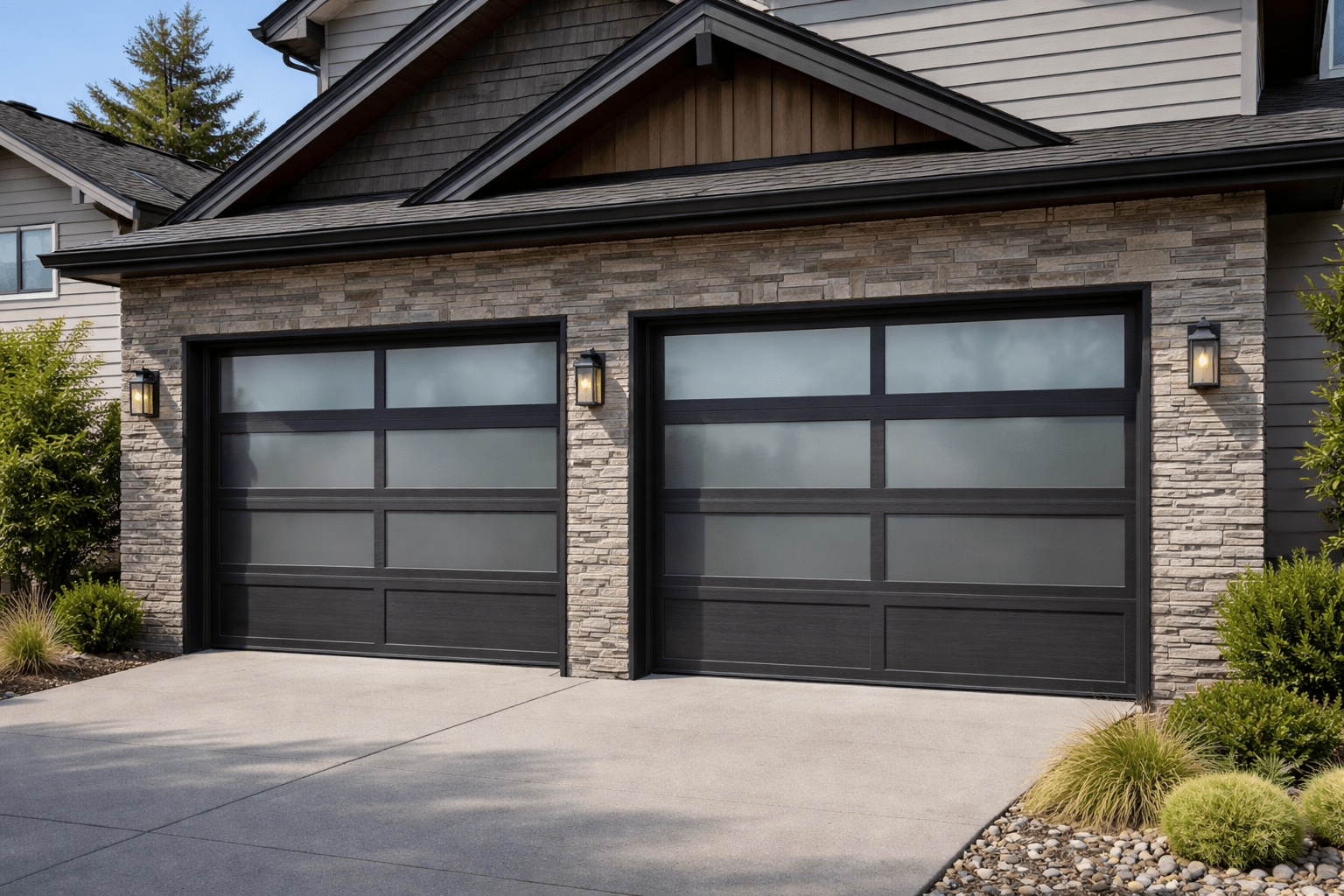
Fiberglass Garage Doors: Best Tips
When it comes to selecting the perfect entryway for your vehicle and storage space, the market offers a dizzying array of materials. However, fiberglass garage doors have emerged as a sophisticated middle ground between the natural beauty of wood and the durability of steel. While they may not be as ubiquitous as their aluminum counterparts, these doors offer a unique set of benefits that solve very specific problems for homeowners, particularly those living in coastal areas or regions with fluctuating temperatures.
The appeal of fiberglass garage doors lies in their construction. They are typically built using a steel core, which is then coated with a fiberglass skin. This molding process allows manufacturers to create deep, realistic wood grain textures that are almost indistinguishable from real timber, yet they do not suffer from the same susceptibility to rot, warping, or insect damage.
For the modern homeowner, the decision to install fiberglass garage doors is often driven by a desire for low maintenance without sacrificing curb appeal. Unlike wood, which requires annual staining, or steel, which can rust in salty air, fiberglass remains inert. It is an investment in longevity. Throughout this guide, we will explore the intricate details of this material, helping you decide if it is the right fit for your architectural style and budget.
Understanding What Defines This Material
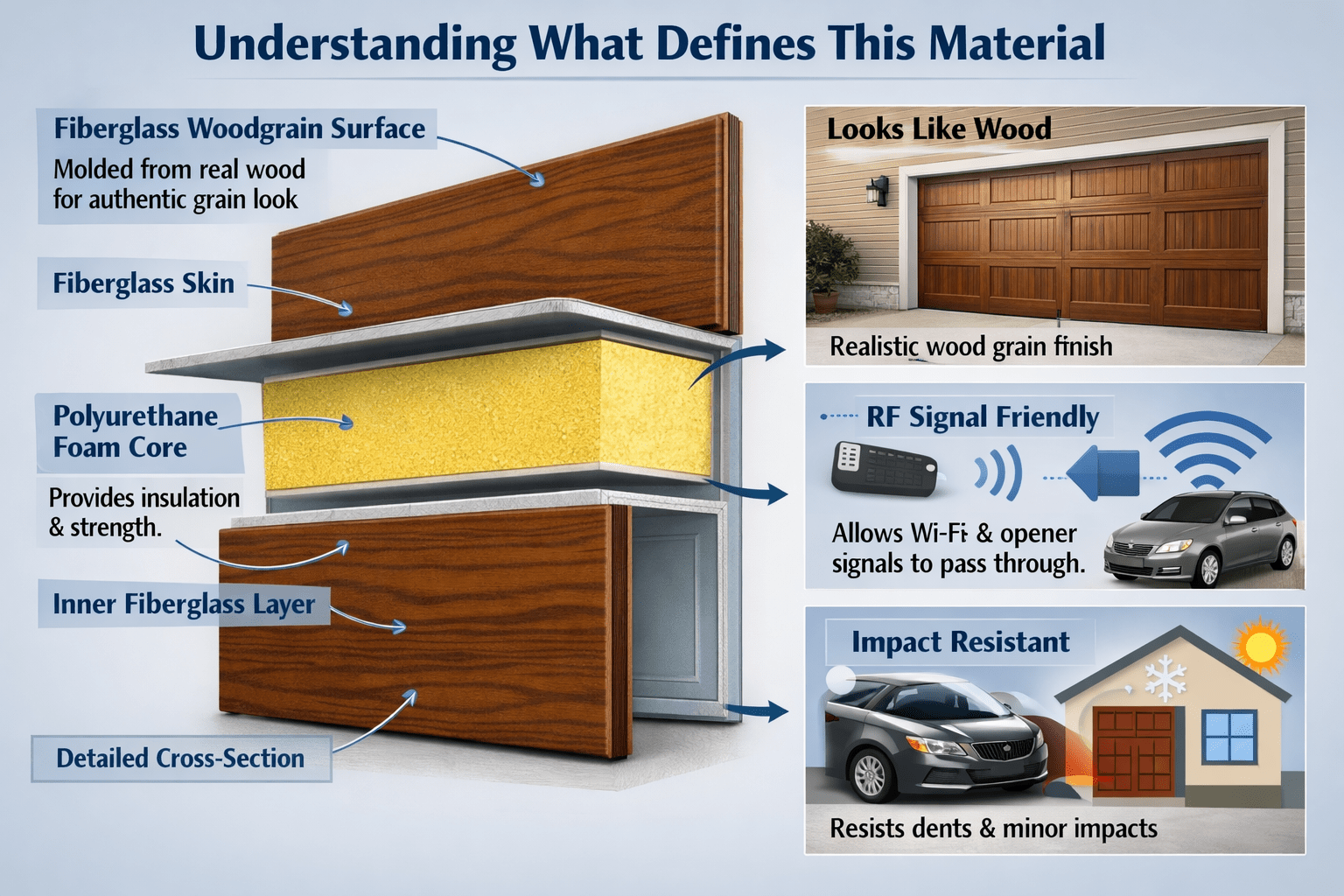
To truly appreciate the value proposition, one must understand what fiberglass garage doors actually are. They are composite units, meaning they are constructed from multiple materials bonded together to create a superior product. The core is usually insulated with polyurethane foam, which provides rigidity and thermal efficiency. This core is then encased between two layers of fiberglass, a reinforced plastic material composed of glass fibers embedded in a resin matrix.
The exterior surface is where the magic happens. High-quality fiberglass garage doors are molded from actual pieces of wood—oak, mahogany, cherry, or cedar—to capture the precise grain patterns. This attention to detail results in a product that mimics the warmth and richness of wood but operates with the lightness and resilience of a synthetic material.
One of the defining characteristics of fiberglass garage doors is their transparency to radio frequency. Unlike steel, which can sometimes interfere with opener signals or home Wi-Fi networks extending into the garage, fiberglass allows signals to pass through easily. This subtle feature ensures that your smart home devices and garage door openers function seamlessly.
Furthermore, the structural integrity of fiberglass garage doors is impressive. While they can crack if hit with significant force (like a moving vehicle), they are incredibly resistant to minor dents and dings that would permanently mar a steel or aluminum door. This “memory” inherent in the material means it can absorb small impacts and bounce back, maintaining its pristine look for years.
How to Find the Right Supplier
Locating the best fiberglass garage doors requires more than a simple internet search. Because they are a more specialized product compared to standard steel doors, not every local dealer will carry a wide stock. You must look for certified dealers who specialize in composite and high-end architectural doors.
Start by visiting the websites of major manufacturers. Most reputable brands that produce fiberglass garage doors will have a “dealer locator” tool. This ensures you are connecting with a company authorized to sell and install their specific product lines. It is crucial to visit a showroom in person. Because the primary selling point of fiberglass is its faux-wood appearance, you need to see the grain and finish with your own eyes to ensure it meets your aesthetic standards.
When vetting suppliers for fiberglass garage doors, ask about their experience with the material. Installation of fiberglass units can be slightly different from steel due to the way the panels are joined and the care required in handling the finish. A supplier who deals primarily in cheap aluminum doors might not have the expertise required to handle a premium fiberglass unit without scratching the surface or misaligning the tracks.
Read reviews specifically looking for mentions of “composite” or “fiberglass.” Past customers will often highlight whether the thermal claims made by the salesperson held true and if the finish of their fiberglass garage doors held up against local weather conditions. Additionally, check if the supplier offers a warranty on the finish itself, not just the mechanical parts, as this is a key indicator of quality.
Determining How Much You Will Spend
The financial aspect is always a primary concern for homeowners. Generally, fiberglass garage doors occupy a mid-to-high price tier. They are significantly more expensive than standard non-insulated steel doors but usually cost less than authentic, high-end solid wood doors.
The price of fiberglass garage doors is influenced by several factors including the level of insulation, the complexity of the grain texture, the inclusion of windows, and the hardware upgrades. A basic model might start at a moderate price point, but once you add designer glass, decorative hardware, and high R-value insulation, the cost can rise substantially.
It is important to view the cost of fiberglass garage doors through the lens of long-term value. While the upfront sticker price is higher than steel, the lack of maintenance costs balances the equation. You will not be buying stain every year, nor will you be paying for rust remediation.
When gathering quotes for fiberglass garage doors, ensure the estimate includes the removal and disposal of your old door, as well as the replacement of the track and springs. Because fiberglass units can differ in weight compared to your old door, your existing spring system will likely need to be upgraded to ensure safe operation.
Why Homeowners Prefer This Material
The “Why” behind the popularity of fiberglass garage doors is multifaceted. Primarily, it is about geography and climate. For homeowners living near the ocean, salt air is the enemy of steel. Salt corrosion can eat through a galvanized steel door in just a few years. Fiberglass, being a non-corrosive composite, is completely impervious to salt. This makes fiberglass garage doors the gold standard for coastal properties.
Beyond the coast, the aesthetic versatility drives preference. Modern architecture often demands the look of wood to soften the sharp lines of concrete and glass. However, real wood moves, expands, and contracts with humidity changes. Fiberglass garage doors provide that coveted organic visual without the organic instability. They stay dimensionally stable regardless of humidity levels.
Another reason for choosing fiberglass garage doors is sound dampening. The combination of the fiberglass shell and the polyurethane foam core creates a very quiet door. For homes with living spaces directly above or adjacent to the garage, this reduction in operational noise and the dampening of street noise is a significant lifestyle improvement.
Energy efficiency is also a major driver. Because fiberglass is a poor conductor of heat (unlike metal), it acts as an insulator itself. When combined with a foam core, fiberglass garage doors offer excellent thermal regulation, keeping the garage cooler in summer and warmer in winter, which contributes to overall home energy efficiency.
How Long You Can Expect It To Last
Longevity is a hallmark of this material. Under normal conditions, fiberglass garage doors can last between 15 to 20 years, and often longer with proper care. The lifespan is heavily dictated by the quality of the UV coating applied during manufacturing.
While fiberglass does not rust or rot, it is sensitive to intense, prolonged sunlight. Over many years, UV rays can degrade the resin, causing the fiber to bloom or the color to fade (yellowing). However, modern fiberglass garage doors come with advanced factory finishes designed to resist UV damage for extended periods.
The mechanical components—springs, rollers, and hinges—will likely need replacement before the door panels themselves. If you maintain the hardware, the panels of fiberglass garage doors can serve you for decades.
In comparison to wood, which might rot at the bottom seal within 10 years if not vigilant, fiberglass garage doors maintain their structural integrity at the ground level where moisture accumulation is most common. This resistance to ground-level rot extends the usable life of the door significantly.
How to Install and Set Up Correctly
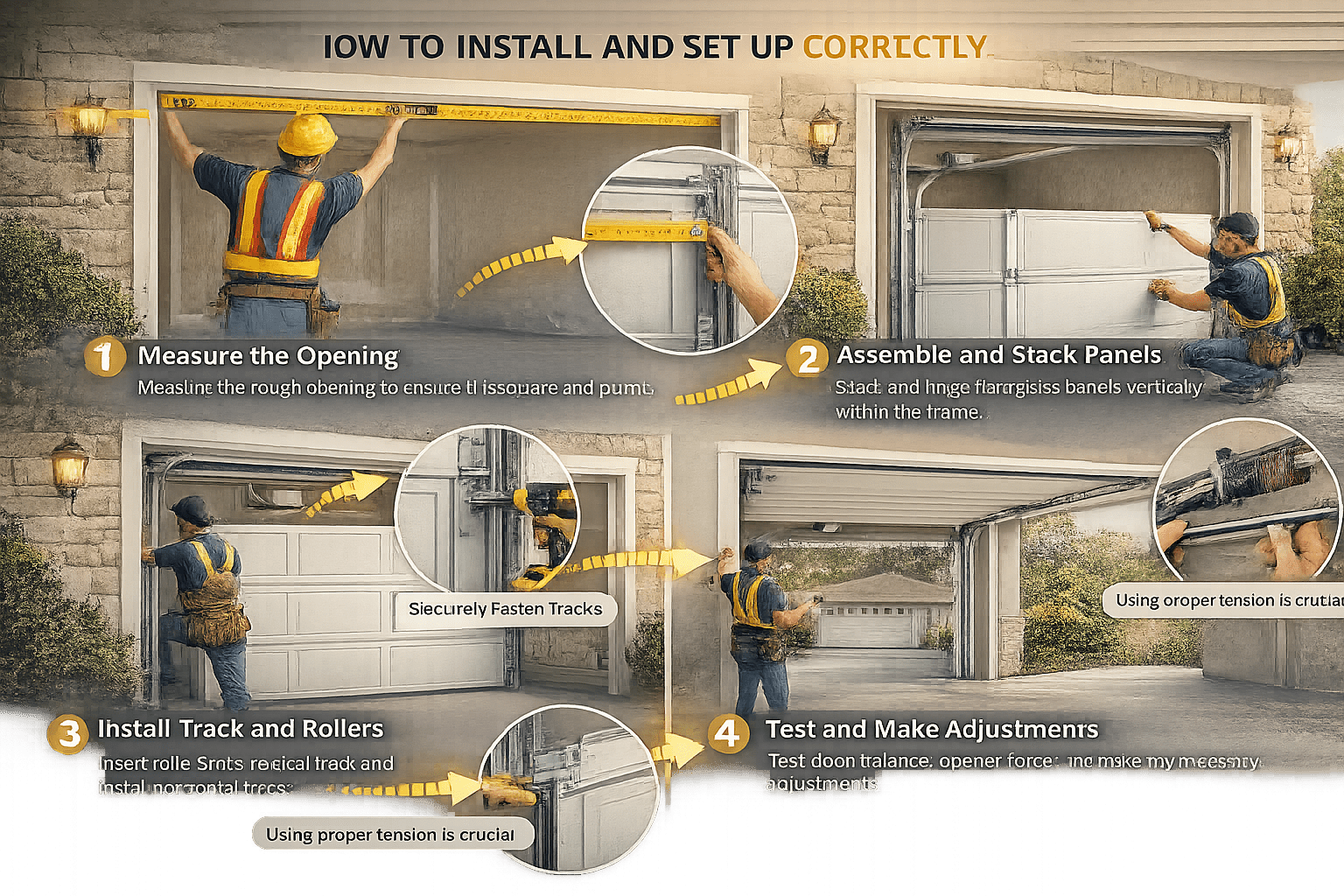
Installing fiberglass garage doors is a precise process that is best left to professionals, though understanding the steps is valuable for any homeowner. The process begins with measuring the opening to ensure the rough frame is square and plumb. Because fiberglass is rigid, it is less forgiving of a crooked frame than flexible thin-gauge steel.
The installation of fiberglass garage doors involves assembling the sections vertically, stacking them one by one in the opening. The hinges are attached to the pre-drilled points on the steel stiles embedded within the fiberglass. It is vital that the installer uses the correct fasteners; over-tightening screws into the composite material can strip the holes or crack the interior liner.
Once the panels are stacked and the rollers are inserted into the vertical track, the horizontal track is installed. The critical moment in installing fiberglass garage doors is the spring tensioning. Because these doors have a specific weight class, the torsion springs must be wound to the exact specification to balance the door. An unbalanced door will wear out the opener motor prematurely.
Finally, weatherstripping is applied. Because fiberglass garage doors are often chosen for energy efficiency, a high-quality bottom seal and perimeter weather seal are essential to complete the thermal envelope. The installer should also adjust the opener’s force settings to accommodate the specific mass of the new fiberglass unit.
Should I Choose This Over Steel
The debate between steel and fiberglass garage doors is common. You should choose fiberglass if you live in a coastal region, a high-humidity area, or if you simply demand the look of wood without the maintenance. If you live in an area with extreme wind loads or high crime rates where maximum impact resistance is the priority, heavy-gauge steel might be a better option simply for its brute strength.
However, for the vast majority of suburban applications, fiberglass garage doors offer a better visual return on investment. Steel doors stamped with a wood grain texture often look artificial because the depth of the stamping is limited by the metal’s thickness. Fiberglass molding allows for deep ridges and varied textures that steel simply cannot replicate.
Consider the thermal break as well. Steel conducts cold. Even an insulated steel door will have thermal bridging at the edges unless it has a sophisticated thermal break. Fiberglass garage doors naturally resist this bridging, providing a more consistent thermal barrier.
Ultimately, the choice comes down to budget versus aesthetics and climate. If budget is the primary constraint, steel wins. If aesthetics and corrosion resistance are the priorities, fiberglass garage doors are the superior choice.
Can I Customize The Appearance
One of the most exciting aspects of fiberglass garage doors is the customization potential. Manufacturers offer a spectrum of factory finishes, ranging from Golden Oak and Walnut to Whitewash and Mahogany. These finishes are baked on and multi-layered to provide depth.
Beyond color, you can customize the panel design. You can choose from V-groove paneling for a carriage house look, flush panels for a modern minimalist aesthetic, or raised panels for traditional colonial charm. The flexibility of the molding process means fiberglass garage doors can adapt to almost any architectural style.
Window inserts are another major customization area. You can select obscure glass for privacy, clear glass for light, or decorative ironwork inserts to add elegance. Because the frame around the glass is also fiberglass, it ensures a leak-proof seal that matches the door perfectly.
Hardware is the final touch. Magnetic or screw-on decorative handles and hinges can transform standard fiberglass garage doors into carriage-house masterpieces. Because the material is solid, it holds hardware securely, allowing you to change the look of the door simply by swapping out these accessories.
Advantages and Challenges to Consider
It is important to have a balanced view of fiberglass garage doors. The advantages are clear: they do not rust, they do not rot, they insulate well, and they look beautiful. They are low maintenance, requiring only an occasional wash with mild soap and water to keep them looking fresh.
However, there are challenges. Fiberglass garage doors can be brittle in extreme cold. If you live in a region where temperatures regularly drop well below zero and stay there, a hard impact on the door could cause the fiberglass to crack or shatter, whereas steel would just dent.
Another challenge is the potential for yellowing if the UV coating wears off. While modern technology has minimized this, it is still a consideration for doors facing directly south in very sunny climates. You may need to apply a clear coat protectant every few years to maintain the UV barrier on your fiberglass garage doors.
Cost is also a hurdle for some. The premium price point puts fiberglass garage doors out of budget for some renovation projects. Additionally, they are not as easily repaired as wood. If a wood panel rots, you can replace the board. If a fiberglass panel cracks, you often have to replace the entire section.
Critical Details on Paint and Insulation
This section addresses specific technical inquiries often made by homeowners regarding the modification and thermal properties of these units.
can you paint a fiberglass garage door ?
Yes, you certainly can, but it requires specific preparation. Unlike wood that absorbs paint, fiberglass is non-porous. You must use an acrylic latex exterior paint for the best adhesion. Before painting, the surface must be cleaned thoroughly to remove any wax or release agents from the manufacturing process. A primer designed for synthetic materials is often recommended. Painting fiberglass garage doors allows you to change the color scheme of your home without replacing the door, offering great flexibility for future renovations.
fiberglass garage door insulation
The insulation in these doors is typically a foamed-in-place polyurethane. This expands to fill every crevice within the door cavity, bonding the front and back skins together. This process creates a composite structure that is incredibly strong. The insulation value of fiberglass garage doors is generally higher per inch than polystyrene-insulated steel doors because the fiberglass skin itself does not conduct heat, adding to the overall thermal efficiency of the assembly.
fiberglass insulated garage doors
When shopping, you will see R-values listed. Fiberglass insulated garage doors often boast R-values ranging from R-8 to R-16, depending on the thickness. This high level of insulation is vital for attached garages where the temperature of the garage impacts the room above it. By installing fiberglass insulated garage doors, you are effectively adding a thermal blanket to one of the largest openings in your home, reducing the load on your HVAC system.
fiberglass garage doors Cost
As mentioned earlier, pricing varies, but to be specific, a single-car fiberglass door might range from $1,500 to $2,500 installed, while a double-car door can range from $2,800 to over $5,000 depending on the design and glazing options. The fiberglass garage doors Cost is an investment in the property’s value. While high, the return on investment regarding curb appeal and energy savings is substantial.
Frequently Asked Questions : Fiberglass garage doors
Do fiberglass garage doors fade in the sun?
Over a long period, yes, they can experience some fading or yellowing if exposed to intense, direct sunlight daily. However, high-quality doors come with UV-resistant factory finishes that mitigate this issue significantly compared to older models.
Are fiberglass garage doors heavy?
They are generally lighter than solid wood doors and insulated steel doors of the same thickness. This lighter weight puts less strain on the garage door opener and the torsion springs, potentially extending the life of your lifting mechanism.
Can I repair a crack in my fiberglass door?
Small hairline cracks can sometimes be repaired using fiberglass filler kits similar to those used for automotive repairs. However, significant cracks usually compromise the structural integrity and aesthetic of the panel, often requiring the replacement of the damaged section.
How do I clean my fiberglass garage door?
Cleaning is simple. Use a solution of mild dish soap and water. Apply it with a soft sponge or cloth. Avoid abrasive cleaners or stiff brushes that could scratch the clear coat finish. Rinse with a gentle stream of water; do not use a high-pressure power washer.
Are fiberglass garage doors secure?
Yes, they are secure. While the skin is fiberglass, the internal construction usually involves steel stiles and rails, making them sturdy. When paired with a modern opener that has a locking mechanism, they provide a high level of security for your home.
Conclusion
In the search for the ideal blend of durability, beauty, and efficiency, fiberglass garage doors stand out as a premier choice for the discerning homeowner. They solve the perennial problems of rust and rot that plague steel and wood doors, respectively, while offering an aesthetic warmth that enhances any architectural style.
While the initial investment may be higher than basic options, the long-term benefits of reduced maintenance, energy savings, and sustained curb appeal make fiberglass garage doors a financially sound decision. whether you are renovating a coastal cottage or a suburban contemporary home, these doors offer a solution that is tough enough to weather the elements yet refined enough to be the centerpiece of your home’s exterior.
By understanding the construction, costs, and installation requirements detailed in this guide, you are now equipped to navigate the market and select the best fiberglass garage doors for your specific needs. Remember that the quality of installation is just as important as the quality of the door, so ensure you partner with reputable professionals to bring your vision to life.
Other Resources
Wayne Dalton – Fiberglass Garage Doors – Product overview highlighting fiberglass garage door options and material characteristics.
Overhead Door – Informational page describing residential fiberglass garage doors and their features.
Wayne Dalton – Model 8680 – Product detail page outlining specifications for a fiberglass garage door model.
Other Helpful Articles
Garage Door Repair Smyrna – Local service article outlining garage door repair services in Smyrna.
Off-Track Garage Door Repair – Guide explaining causes and repair approaches for off-track garage doors.
Garage Door Keypad Not Working Easy Fixes – Article covering common reasons garage door keypads fail and basic troubleshooting steps.