
Broken garage door cable: Best Tips
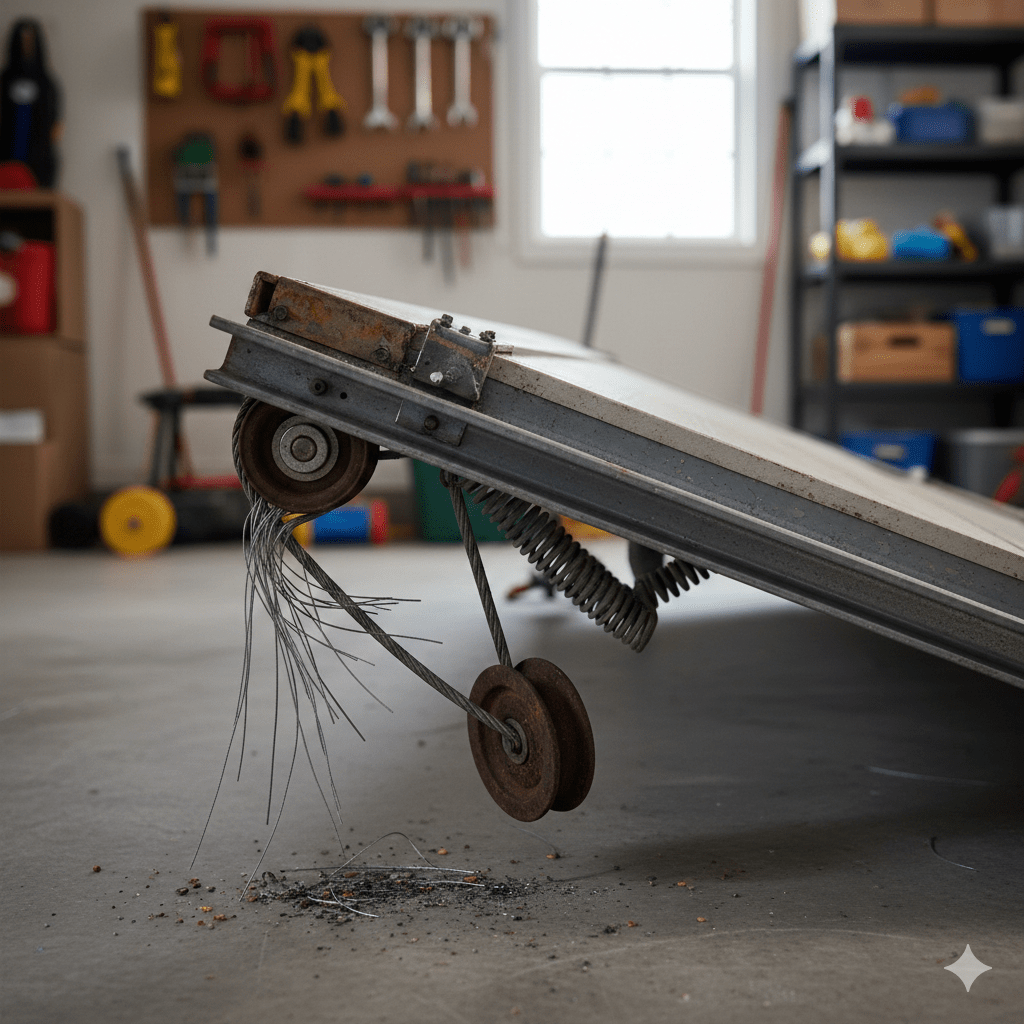
Broken garage door cable: Safety Tips
The sound is unmistakable: a loud bang followed by the grinding noise of metal on metal, and suddenly, your daily routine is halted. If you are experiencing this, you are likely dealing with a broken garage door cable, a common but serious issue that plagues homeowners everywhere. This component is essential for the smooth operation of your overhead door system, acting as the muscle that transfers the energy from the springs to the door itself. When this cable snaps, the door can become heavy, crooked, or completely stuck, trapping your vehicle inside or leaving your home vulnerable to intruders.
Understanding the mechanics behind a broken garage door cable is the first step toward resolving the issue safely. Whether you have a torsion spring system mounted above the door header or an extension spring system running along the horizontal tracks, the cables are under immense tension. Over time, moisture, rust, and simple wear and tear weaken the strands of galvanized steel until they can no longer support the weight of the door. Ignoring the early signs of fraying can lead to a catastrophic failure where the cable snaps unexpectedly.
In this comprehensive guide, we will explore everything you need to know about this specific mechanical failure. We will discuss the costs involved, the time required for repairs, and the deep safety implications of trying to fix a broken garage door cable yourself. We will also look at the specific tools required and the differences between standard lift cables and safety cables. By the end of this article, you will have a clear path forward, ensuring your garage door is restored to full functionality without compromising the safety of your family or your property.
What Is a Garage Door Cable and Why Does It Snap?
To understand why a broken garage door cable causes such chaos, you must first understand what the cable actually does. In a standard overhead door setup, the cables are distinct from the springs, yet they work in tandem. The springs provide the counterbalance power essentially making a 300-pound door feel like it weighs only 10 pounds—but the cables are the mechanism that physically lifts the weight. When you have a broken garage door cable, that connection is severed. The spring may still have tension, but it has no way to transfer that energy to the door panels.
There are generally two types of cables used in residential garage doors: lift cables and safety cables. Lift cables are standard on both torsion and extension spring doors. They attach to the bottom brackets of the door and wind around drums (in torsion systems) or run through pulleys (in extension systems). When you encounter a broken garage door cable, it is usually the lift cable that has failed. Safety cables, on the other hand, are exclusively used with extension springs.
They run through the center of the spring to prevent it from flying across the garage if the spring itself breaks. While a snapped safety cable is less immediately disabling than a broken lift cable, it still poses a significant safety hazard.
The anatomy of the cable itself is also important. These are typically made of aircraft-grade galvanized steel strands twisted together to form a rope. Despite their strength, they are not invincible. A broken garage door cable often occurs near the bottom loop where moisture collects, or near the drum where friction is highest. Once a single strand begins to fray, the integrity of the entire rope is compromised. If you continue to operate the door with a fraying line, it is only a matter of time before you are dealing with a fully broken garage door cable.
How to Find the Right Replacement for Your System
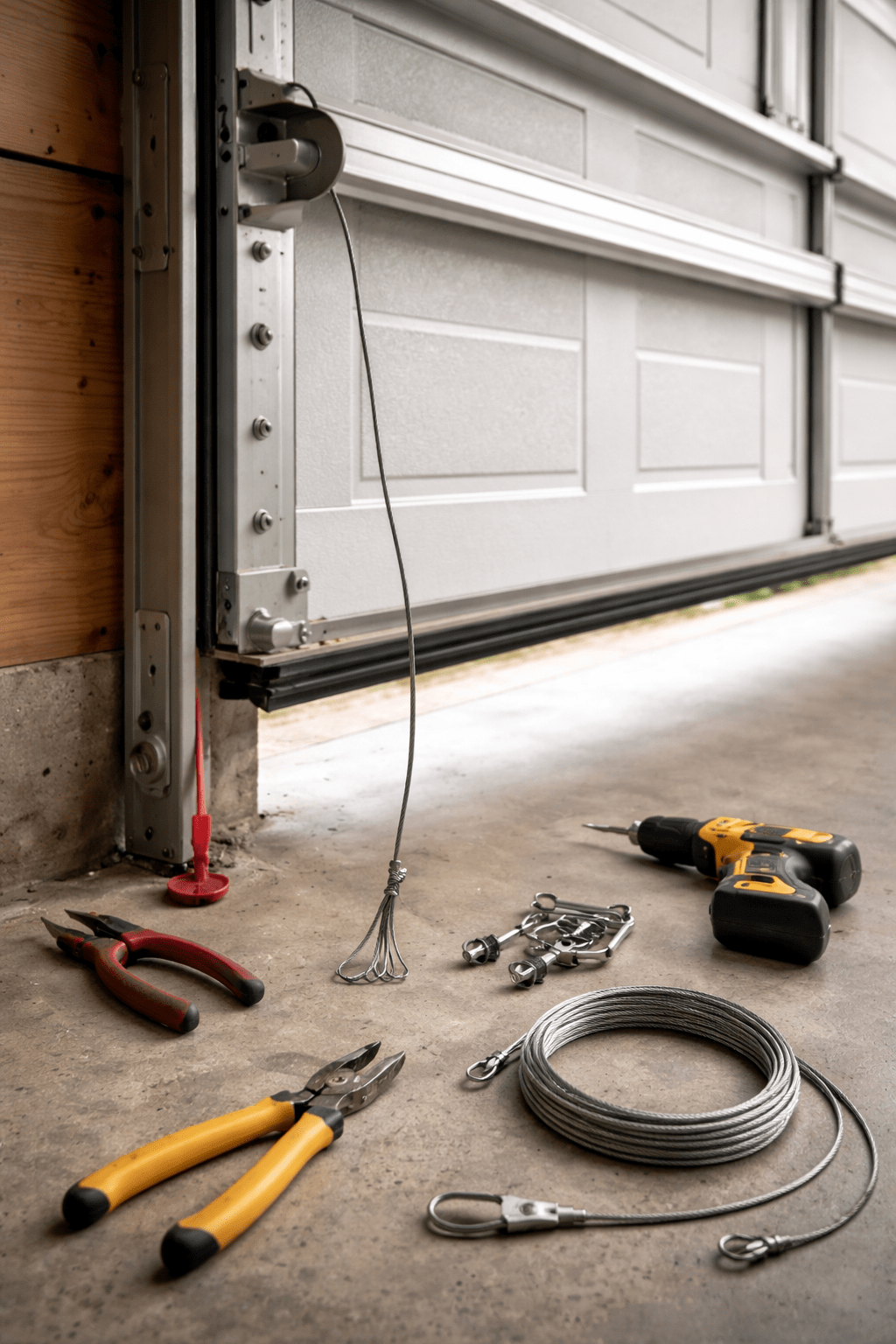
Identifying that you have a broken garage door cable is relatively easy, but finding the correct replacement requires attention to detail. You cannot simply buy a generic piece of wire from a hardware store and hope it works. Garage door cables are specific in length, thickness, and attachment style. Using the wrong cable can lead to uneven lifting, derailment, or even a secondary failure that is more dangerous than the original broken garage door cable.
First, you must determine the length. If the cable has snapped, you cannot simply measure the broken pieces unless you are certain you have all the fragments. A better method is to measure the height of your garage door. Standard residential doors are typically seven or eight feet tall. The length of the cable required corresponds to this height, plus extra length to wrap around the drums. If you install a cable that is too short, the door will not close completely. If it is too long, the cable may slip off the drum, simulating the effects of a broken garage door cable even if the new wire is intact.
Thickness is another factor. Standard residential cables are usually 1/8 inch or 3/32 inch thick. Heavier wood doors may require thicker cables to handle the load. When you are shopping to replace a broken garage door cable, you must match the diameter of the old cable exactly. Additionally, look at the ends of the cable. Some have loops with crimped stops, while others have fused ends. Examining the drum and the bottom bracket on your door will tell you which termination style is required to fix your broken garage door cable effectively.
Why Do Cables Break in the First Place?
It is natural to wonder why this happened. A broken garage door cable is rarely a spontaneous event; it is usually the result of a long process of degradation. The most common culprit is rust. Since the bottom brackets of the garage door are close to the floor, they are often exposed to water, road salts, and snow brought in by your car. This moisture wicks into the cable, causing corrosion from the inside out. A rusty cable is a weak cable, and eventually, the weight of the door causes it to snap, leaving you with a broken garage door cable.
Friction is the second leading cause. If the pulleys are worn out or the bearings in the drums are seizing, the cable will drag against immovable surfaces rather than gliding smoothly. This abrasion wears down the galvanized coating and cuts into the steel strands. If your door has been making screeching noises recently, it was likely a warning sign preceding the broken garage door cable. Poor alignment of the tracks can also cause the cable to rub against the metal frame, sawing through it over time.
Another reason for a broken garage door cable is improper tension maintenance. If the springs are not balanced correctly, one cable may be carrying more weight than the other. This uneven load creates stress points. When the door drops heavily on one side, the shock load can snap the cable instantly. Furthermore, if the cable jumps off the drum—often caused by closing the door on an object—it can get tangled and crushed. A crushed cable loses its structural integrity and essentially becomes a broken garage door cable waiting to happen.
How Much Does Professional Repair Typically Cost?
Budget is always a concern for homeowners facing unexpected repairs. The cost to fix a broken garage door cable varies depending on your location, the type of door you have, and whether it is an emergency call. Generally, this is considered a mid-range repair—more expensive than replacing a roller but cheaper than replacing a full panel or opener. When you call a professional to handle a broken garage door cable, you are paying for three things: parts, labor, and the assurance of safety.
On average, the materials for a broken garage door cable are inexpensive. A pair of high-quality cables might cost between $15 and $30. However, the labor is where the cost lies. A technician must safely unwind the high-tension springs, remove the old cables, install the new ones, re-tension the springs, and balance the door. This process requires expertise. For a standard service call to fix a broken garage door cable, you can expect to pay between $150 and $350.
Emergency services will drive this price up. If your broken garage door cable has trapped your car inside on a Sunday morning or late at night, you might pay a premium for after-hours service. While it might be tempting to save money by doing it yourself, you must weigh the financial savings against the physical risks. A broken garage door cable repair gone wrong can lead to ER visits or further damage to the door, which will cost far more than the initial professional fee.
How Long Does a Cable Repair Actually Take?
Time is a valuable commodity. When you are stuck with a broken garage door cable, you want it fixed immediately. For a professional technician, replacing a pair of cables is a routine task. Assuming there are no complications, such as rusted-on bolts or a damaged winding shaft, a pro can usually resolve a broken garage door cable issue in about 45 minutes to an hour. They have the specialized tools and the muscle memory to perform the job efficiently.
If you decide to tackle the broken garage door cable yourself, the timeline changes significantly. For a DIYer, this is not a quick 30-minute job. You will need to source the correct parts, gather the necessary tools (including winding bars and vice grips), and watch tutorials to understand the safety procedures. A homeowner attempting to fix a broken garage door cable for the first time should budget at least three to four hours for the project.
This time estimate includes the necessary safety checks. You cannot simply slap a new wire on and walk away. You must level the door, ensure the tension is equal on both sides, and test the safety reverse mechanisms. Rushing through a repair on a broken garage door cable is a recipe for disaster. If you do not have a half-day to dedicate to learning and executing this repair, calling a professional is the time-efficient choice for handling a broken garage door cable.
Can I Repair This Myself or Do I Need Help?
The question of “Can I?” versus “Should I?” is paramount here. Technically, a homeowner can repair a broken garage door cable. The parts are available to the public, and the tools are standard mechanics’ tools. However, the procedure involves manipulating the torsion springs, which are under extreme tension. If you have a broken garage door cable on a torsion spring system, you must unwind the spring to replace the cable. This is the step that injures thousands of homeowners every year.
If you have an extension spring system (springs above the tracks), replacing a broken garage door cable is somewhat safer and easier for a DIYer. You can lift the door manually and clamp it in place to relieve tension on the springs. However, even this method carries risks. If the clamp slips, the door can crash down, or the spring can recoil. Dealing with a broken garage door cable requires a healthy respect for physics and gravity.
If you are not comfortable standing on a ladder, using heavy tools, or following precise mechanical instructions, you should not attempt to fix a broken garage door cable. The money saved is not worth the risk of a severed finger or a concussion. However, if you are mechanically inclined and have the proper winding bars (never use screwdrivers), you can successfully replace a broken garage door cable. It ultimately comes down to your confidence level and your risk tolerance.
Should I Replace Both Cables at the Same Time?
When you discover a broken garage door cable on the left side, it is tempting to only replace the left cable. After all, the right one looks fine, doesn’t it? This is a common mistake. Professionals will almost always recommend replacing both cables simultaneously, and for good reason. Cables typically come from the same batch and have endured the same number of cycles. If you have a broken garage door cable on one side, the other side is likely on the verge of failure as well.
Replacing only the broken garage door cable creates an imbalance. The new cable will be stiff and un-stretched, while the old surviving cable will have stretched slightly over years of use. This difference in length and elasticity can cause the door to hang unevenly, putting stress on the rollers and the track. By changing only the broken garage door cable, you are setting yourself up for another repair job in the very near future.
Furthermore, replacing both cables ensures that the drums are wound consistently. It allows you to reset the system to a “zero point,” ensuring perfectly level operation. The cost of the second cable is negligible compared to the effort of setting up the repair. Whether you are doing it yourself or hiring a pro, treat a broken garage door cable as a system failure, not an isolated part failure. Always replace them in pairs to ensure long-term reliability.
How to Install New Cables Safely and Correctly
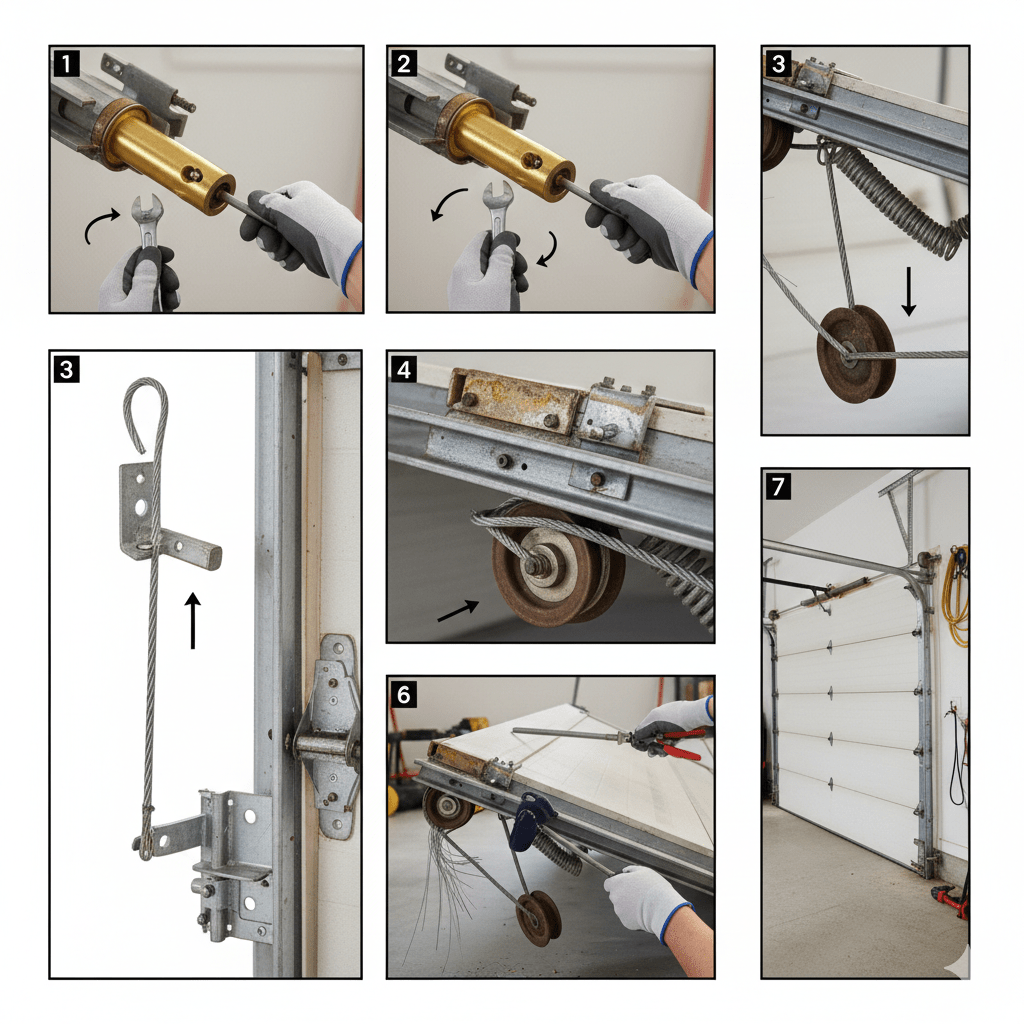
If you have decided to proceed with the repair of your broken garage door cable, safety is your priority. You will need winding bars, two locking pliers (vice grips), a wrench set, and safety glasses. Start by disconnecting the garage door opener to prevent accidental activation. If the door is stuck open due to the broken garage door cable, carefully lower it to the ground. You cannot change cables on a torsion system while the door is open because the tension is too high.
For a torsion spring system, you must insert the winding bars into the spring cone and carefully loosen the set screws. Unwind the tension from the spring, counting the turns so you can restore it later. Once the tension is off, the drum will spin freely. Remove the remnants of the broken garage door cable from the drum and the bottom bracket. Hook the new cable loop onto the bottom bracket post and run it up the wall to the drum. This is the critical moment in fixing a broken garage door cable: ensuring the cable sits perfectly in the grooves of the drum.
Tighten the drum, ensuring the cable is taut. Then, use your winding bars to wind the spring back up to the original tension. This is the dangerous part; keep your body clear of the cones. Once wound, tighten the set screws. Remove the pliers and test the door manually. If the door stays halfway open without falling or shooting up, you have successfully fixed the broken garage door cable. If it is uneven, you will need to adjust the drums again.
Advantages and Challenges of DIY Cable Repair
There are distinct advantages and disadvantages to handling a broken garage door cable yourself. The primary advantage is cost savings. You avoid the labor markup and the service fee. Additionally, there is a sense of accomplishment in fixing a complex mechanical issue in your home. For those who live in remote areas where technicians are scarce, knowing how to fix a broken garage door cable is a valuable skill that adds to your self-reliance.
However, the challenges are significant. The physical danger cannot be overstated. A slip of the winding bar can result in broken hands or facial injuries. Furthermore, a DIY fix on a broken garage door cable often lacks the warranty that comes with professional work. If your repair fails a week later and damages the door panels, you are liable for the full cost of replacement. There is also the challenge of diagnostics. A professional might spot that the broken garage door cable was actually caused by a bad bearing—something a DIYer might miss, leading to repeat failures.
Another challenge is the physical exertion. Lifting a garage door manually because of a broken garage door cable is heavy work. Working overhead on a ladder with heavy tools requires stability and strength. If you have back issues or balance problems, the “advantage” of saving money is quickly outweighed by the physical challenge. Weigh these factors carefully before deciding to tackle a broken garage door cable on your own.
Emergency Scenarios and Quick Fix Techniques
Sometimes, you need immediate solutions before a full repair can be completed. Dealing with a broken garage door cable in an emergency requires specific knowledge to prevent injury and secure your home. Below are four specific scenarios homeowners often face when dealing with cable failures.
How to fix a broken cable on a garage door
In a true emergency where you cannot get parts, you cannot effectively “repair” a snapped wire. You must replace it. However, if the cable has merely slipped off the drum and is not a broken garage door cable in the sense of being snapped, you can potentially put it back. Release the spring tension (safely!), re-seat the cable in the grooves, and re-tension. If the strands are separated, do not attempt to tape or clamp the cable together; a spliced cable will not hold the weight of the door.
How to open garage door with broken spring and cable
This is a worst-case scenario. If you have a broken garage door cable and a broken spring, the door is “dead weight.” It will feel like lifting a solid wall. Do not use the electric opener; you will burn out the motor. You need at least two strong adults. Disconnect the opener. One person should lift from the center or both lift from the sides, keeping backs straight. Lift slowly. Once open, clamp the door firmly to the track with vice grips below the rollers so it cannot crash down.
Garage door cable broke on one side
If you have a broken garage door cable on just one side, the door will look crooked and may jam in the tracks. Do not try to force it down or up with the electric opener. The functioning side will pull while the broken side drags, bending the door panels. To close it, you may need to manually guide the crooked side down while a helper gently lowers the working side, keeping the door as level as possible to prevent track damage.
How to open garage door with broken cable
If only the cable is broken but the spring is intact, the spring on the broken side will have unwound, but the other side may still have tension. This creates a dangerous imbalance. To open a door with a broken garage door cable, follow the same protocol as the dead weight lift: disengage the opener and lift manually. Be very careful, as the door may want to twist or bind in the tracks. Once the car is out, close the door and leave it closed until the broken garage door cable is replaced.
FAQ : Broken garage door cable
What are the first signs of a broken garage door cable?
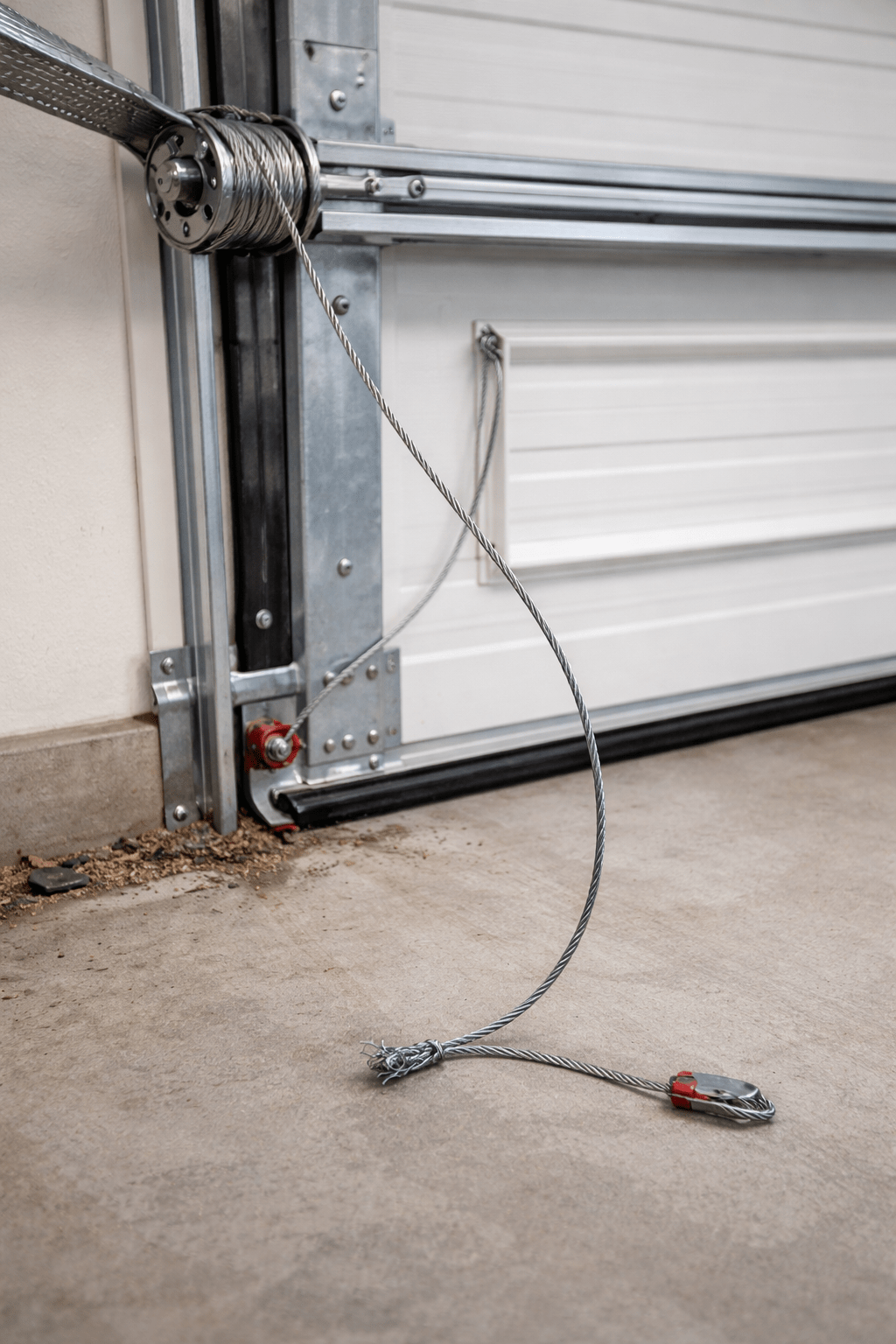
The most obvious sign is the door sitting unevenly or looking crooked in the opening. You might also see loose wire hanging near the tracks. If the door moves a few inches and then stops or binds, this often indicates a broken garage door cable or a cable that has unspooled.
Is it safe to use my opener if I have a broken garage door cable?
No, absolutely not. Using an electric opener with a broken garage door cable puts immense strain on the motor and the top section of the door. It can buckle the door panels or strip the gears in your opener, turning a $200 repair into a $1,000 replacement.
How often should I inspect for a broken garage door cable?
You should inspect your garage door system every six months. Look for fraying, rust, or kinks in the wire. Regular lubrication of the springs and cables can prevent a broken garage door cable by reducing friction and protecting the metal from moisture.
Can a broken garage door cable damage my car?
Yes. If the cable snaps while the door is in motion, the door can free-fall. While safety springs help, a heavy wooden or steel door falling due to a broken garage door cable can crush windshields, dent roofs, or scratch paintwork significantly.
Does insurance cover a broken garage door cable repair?
Standard homeowners insurance typically does not cover wear-and-tear items like a broken garage door cable. However, if the cable break caused the door to fall on your car, your auto insurance might cover the vehicle damage, or homeowners insurance might cover the door if it was due to a specific covered peril, though this is rare.
Conclusion
A broken garage door cable is more than just a minor inconvenience; it is a significant mechanical failure that impacts the safety and security of your home. Throughout this guide, we have explored the critical role these cables play in counterbalancing the weight of your heavy garage door. We have discussed the common causes of failure, ranging from rust and corrosion to simple wear and tear, and emphasized that a broken garage door cable is often a symptom of a system that has lacked maintenance.
Whether you choose to hire a professional or attempt a DIY repair, understanding the risks is paramount. We have seen that the cost of professional repair is often justified by the danger inherent in handling high-tension springs. If you do choose to fix your broken garage door cable yourself, the importance of using the correct tools—specifically winding bars and proper locking pliers—cannot be overstated. Remember that replacing both cables is the standard best practice to maintain a balanced and smooth-running door.
Ultimately, the goal is to restore your home’s functionality safely. A broken garage door cable disrupts your life, trapping your vehicle and leaving your home open to the elements. By following the advice in this article, identifying the correct replacement parts, and respecting the tension of the springs, you can resolve the issue of a broken garage door cable effectively. Regular inspection and lubrication are your best defenses against future failures, ensuring that your garage door lifts smoothly every time you press that button. Don’t wait for the snap; check your cables today.
Other Resources
Reddit – Garage Door Cable Snapped Discussion – Community discussion sharing experiences and advice after a garage door cable failure.
Express Garage Doors – Informational guide explaining DIY garage door cable installation and repair steps.
Rainier Door – Cost-focused article outlining pricing factors for garage door cable repairs.
Other Helpful Articles
16 x 8 Garage Door Insulated – Article describing features and considerations for 16×8 insulated garage doors.
Insulated Garage Door Windows – Guide explaining insulated garage door window options and benefits.
Insulated Roller Garage Door – Article outlining features and advantages of insulated roller garage doors.